Ontario lawns get six months of winter, a spring that lasts about three weeks, a summer that tests everything, and a fall most homeowners spend on cleanup instead of the most valuable work of the year. Knowing what to do in each window — and critically, what to skip — saves money, saves effort, and produces better results than throwing time and fertilizer at the problem all season hoping something sticks.
Fertilize in spring and fall, aerate and overseed in fall, mow at the right height all season, water deeply but infrequently in summer, and skip the spring overseeding temptation — fall is the window that actually works.
Spring Lawn Care (April–May)
Early April: Wake-Up Assessment
Before any action, walk the lawn and assess winter damage. Look for:
- Snow mould patches: circular grey or pink areas where grass has matted. Rake them lightly to break up the matted layer and allow air circulation. Most recover on their own.
- Frost heave: small areas where the ground froze and thawed repeatedly, pushing roots upward. These show as spongy, uneven areas. Light rolling (if soil is no longer saturated) can help reset the surface.
- Winter salt damage: brown, dead zones along driveways and sidewalks from road salt splash. These often need overseeding in fall.
- Bare patches: note locations for fall overseeding — spring seeding in Ontario is second-best; fall is far more successful.
Late April – Early May: First Fertilizer Application
Apply a balanced spring fertilizer once the lawn is actively growing and the ground is no longer saturated. A slow-release formula with higher nitrogen is appropriate for spring — it feeds the flush of growth without overloading the system. Avoid fertilizing too early when soil temperature is below 8–10°C — the roots can't absorb nutrients effectively and you're wasting product while risking runoff.
May: Active Mowing Begins
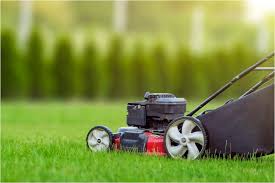
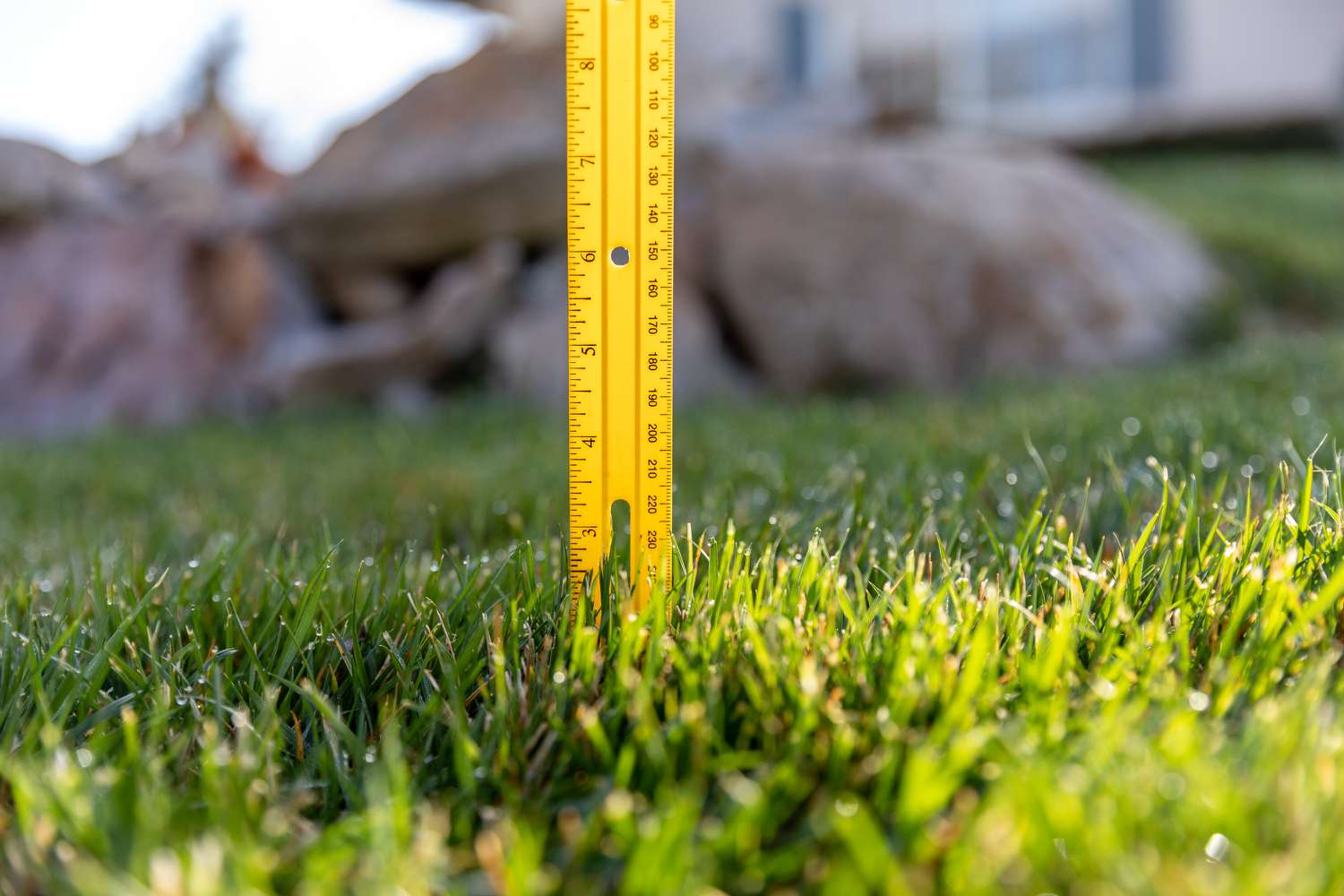
Once consistent growth starts, begin mowing at 3 to 3.5 inches. The first cut of the season can be slightly lower (2.5–3 inches) to remove winter-damaged tips, then raise back to 3.5 inches for all subsequent cuts. Mow every 5 to 7 days in May — spring growth is fast and missing two weeks means violating the one-third rule.
Summer Lawn Care (June–August)
June: Transition to Heat Mode
Watch for the growth rate dropping as temperatures climb. By late June, begin extending the interval between mows to 8–10 days. Raise the deck to 3.5 to 4 inches if you haven't already. Apply a summer fertilizer at a low rate if needed — but many Ontario lawns don't need a mid-summer application if spring was done correctly.
July–August: Minimal Intervention
Summer is maintenance mode. The goal is to not make things worse:
- Mow every 10–14 days at 4 inches. Less in drought.
- Water deeply once or twice per week (1 inch per application) rather than shallow daily watering.
- Do not aerate, overseed, or fertilize heavily in peak summer — all of these stress the grass further.
- If crabgrass appears, raise the mow height rather than reaching for product.
The lawn may go partially dormant in prolonged heat. Dormancy is a survival strategy, not damage. Stop watering a dormant lawn or commit to maintaining it through dormancy with consistent 1-inch per week irrigation. Don't flip between both — stressing a dormant lawn by intermittently watering and stopping is worse than either consistent choice.
Overwatering is the summer mistake we see most often. A homeowner called us about a persistent mushroom problem in the backyard — they were running irrigation every day, 20 minutes per zone. We cut them back to three times a week, deeper and slower. Mushrooms disappeared within two weeks. Daily shallow watering produces shallow roots and the soggy conditions that fungal issues need. Deep, infrequent watering does not.
Fall Lawn Care (September–October) — The Most Important Season
If Ontario homeowners only understood one thing about lawn care, it should be this: fall is the highest-value season. The work you do in September and October pays dividends the following spring, summer, and beyond. This is when cool-season grass grows most efficiently and recovers from summer damage. This is when interventions actually take hold.
Early September: Aeration and Overseeding Window Opens
The ideal window for core aeration and overseeding in Ontario is late August to mid-September — soil temperature is still warm enough for germination (above 10°C), air temperature is cooling, and there are 6–8 weeks of growing season before frost. The sequence:
- Mow to 2.5 inches
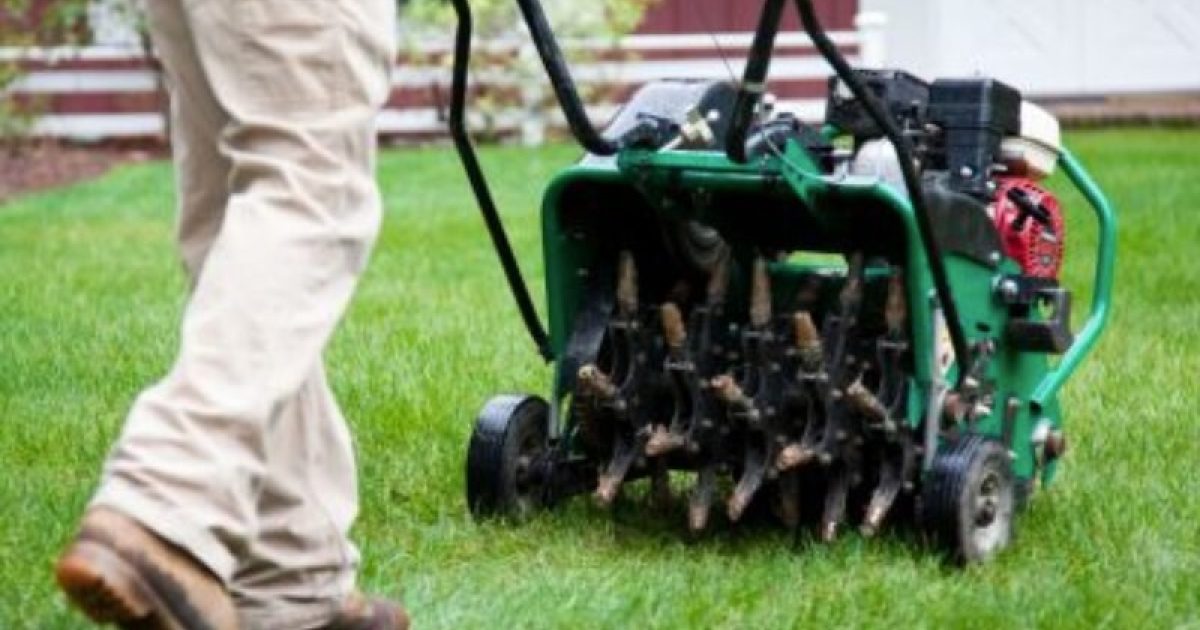
- Core aerate (two passes at perpendicular angles)
- Overseed immediately (seed falls into aeration channels)
- Apply starter fertilizer
- Water lightly twice daily for 3 weeks until germination establishes
See the full aeration and overseeding guide for the complete process.
A note on timing, because this is where most Ontario homeowners get it wrong: a client in Markham had their previous lawn service aerate every late May. Their bluegrass looked fine in spring but struggled every August. Cool-season grasses should be aerated in early fall — not spring — because they hit peak stress in summer and can't recover from aeration wounds. We switched them to September. The difference by the following June was obvious.
Late September: Second Fertilizer Application
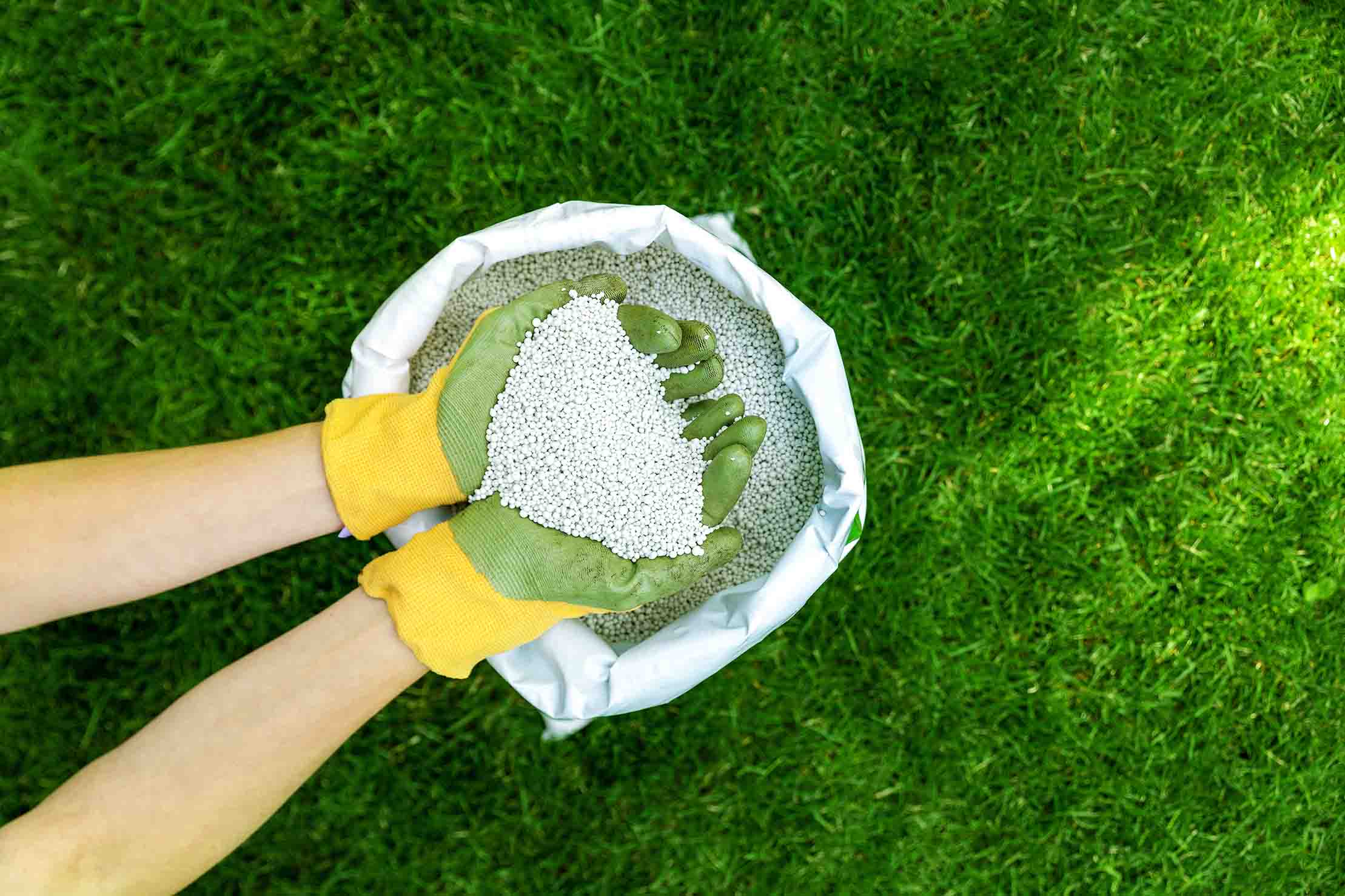
Here's the thing: a well-timed fall fertilizer does more for your lawn than all your spring applications combined. Apply once overseeding germination is established (3–4 weeks after seeding). A higher potassium formula — sometimes called a "winterizer" — helps root development and winter hardiness. Unlike spring fertilizer, fall applications feed the root system, not top growth — the grass stores those nutrients through winter and deploys them the following spring. Most homeowners spend the most time and product in spring because that's when the lawn looks like it needs help. The timing is backward.
October: Final Mowing and Prep
- Continue mowing as growth dictates. Final mow should be at 2.5 to 3 inches.
- Remove fallen leaves promptly — thick leaf mats block light and trap moisture, promoting snow mould.
- Disconnect, drain, and store irrigation systems before the first hard frost (typically mid-October in York Region).
- Optionally apply lime if a soil test shows pH below 6.0 — fall is a good time for lime application since it has the full winter to work into the soil profile.
Winter Lawn Care (November–March)
Ontario cool-season grasses go dormant after sustained frost. There is no active lawn care to do. What you can do:
- Minimize traffic: foot traffic on frozen or frost-covered grass compresses the crowns and can cause permanent thinning. Keep paths clear and redirect foot traffic away from the lawn where possible.
- Use sand-based ice control on adjacent hardscapes: road salt runoff kills lawn margins. If you're treating a driveway or walkway, sand or calcium chloride (used sparingly) causes less lawn damage than sodium chloride.
- Plan for spring: review your lawn's performance from the previous season, order seed if needed, and schedule aeration for fall if you didn't do it this year.
Ontario Lawn Care Calendar: Month-by-Month Summary
| Month | Priority Tasks |
|---|---|
| April | Assess winter damage; light raking of snow mould; first cut when growth begins |
| May | Spring fertilizer; mow every 5–7 days at 3–3.5 in |
| June | Raise deck; extend mowing interval; monitor for heat stress |
| July | Mow every 10–14 days at 4 in; deep watering 1–2×/week; no aeration or heavy fertilizer |
| August | Same as July; late August: schedule aeration and overseeding |
| September | Core aerate + overseed (late Aug–mid Sept); water for germination; resume 7-day mowing |
| October | Fall fertilizer; remove leaves; final mow to 2.5–3 in; winterize irrigation |
| Nov–Mar | Minimize lawn traffic; avoid road salt; plan next season |
Frequently Asked Questions
- University of Minnesota Extension: Lawns & Landscapes — seasonal lawn care guides for northern climates
- Lawn — Wikipedia — year-round lawn care science and seasonal maintenance overview
Full-Season Lawn Care, Done for You
A&E Lawn Care handles the full seasonal calendar — spring fertilizer, summer mowing, fall aeration and overseeding, and winter prep. One team, all season.