Most lawn problems in Ontario — thin turf, crabgrass invasion, brown patches in summer — trace back to one decision made every single week: how low you set the mower deck. Cut at the wrong height and you're doing free marketing for every weed seed in your neighbourhood.
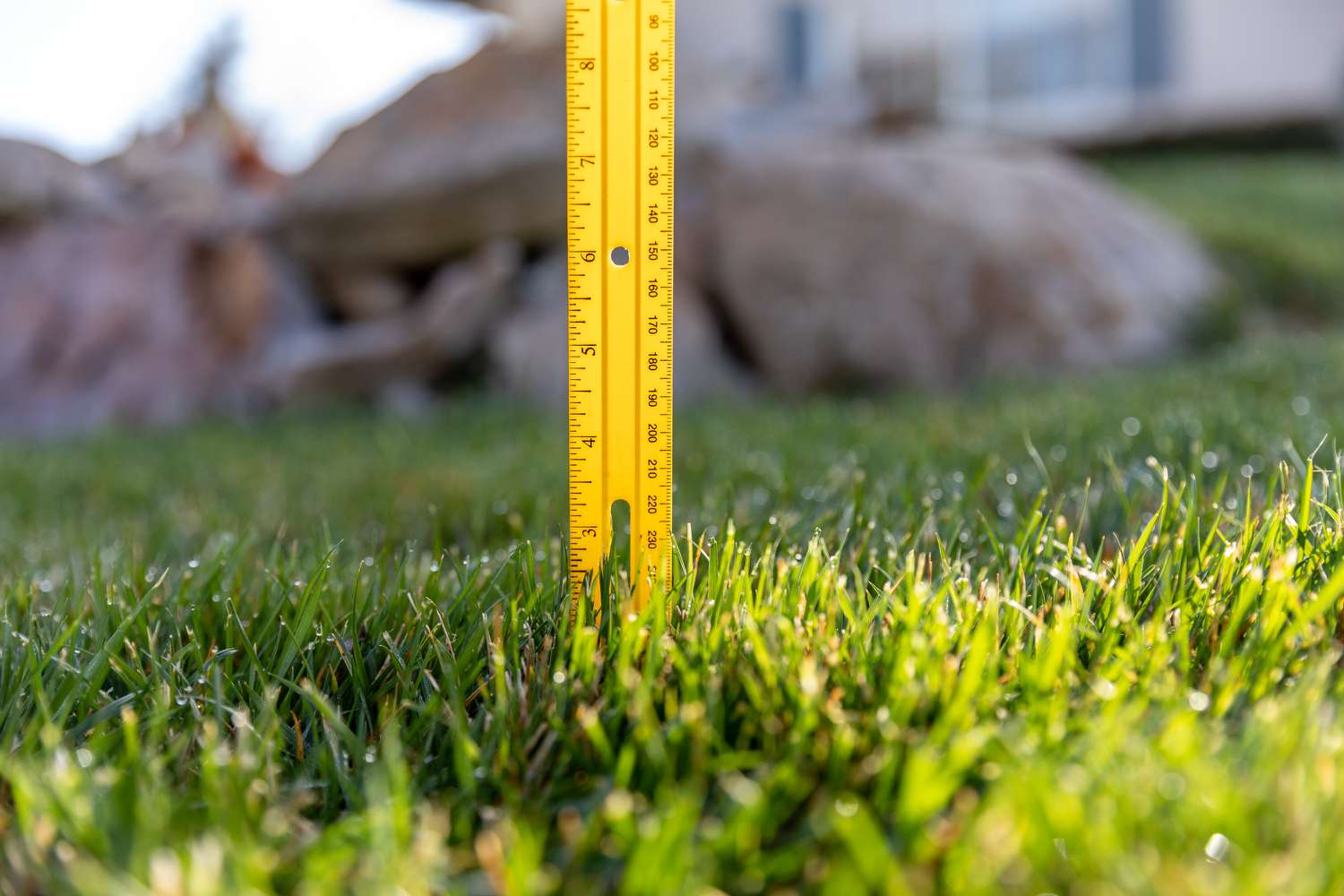
For most Ontario lawns (Kentucky bluegrass, perennial ryegrass, or a fescue blend), cut at 3 to 3.5 inches. Never remove more than one-third of the blade in a single pass. That's it. The rest of this article explains why, and what to do in specific situations.
Why Cutting Height Matters More Than You Think
Grass is a plant, not a carpet. When you cut the blade, you're removing the photosynthetic surface — the part that catches sunlight and produces the energy the plant needs to grow roots, repair itself, and stay thick enough to choke out weeds.
Cut too short and the grass can't produce enough energy to maintain a deep root system. The root zone shallows out. The lawn becomes drought-stressed faster, more susceptible to disease, and thin enough that weed seeds get the light they need to germinate. Cut at the right height and the dense canopy shades the soil, suppresses weeds, holds moisture longer, and signals the plant to push roots deeper.
The difference between 2-inch and 3.5-inch cut heights is often the difference between a lawn that needs constant intervention and one that mostly takes care of itself.
Best Mowing Height by Grass Type in Ontario
Ontario lawns are almost exclusively cool-season grasses. Here are the correct mowing heights:
| Grass Type | Ideal Height | Minimum Height | Notes |
|---|---|---|---|
| Kentucky Bluegrass | 2.5–3.5 in | 2 in | Most common in Ontario subdivisions |
| Perennial Ryegrass | 2.5–3.5 in | 2 in | Fast-germinating, used in overseeding blends |
| Tall Fescue | 3–4 in | 2.5 in | Drought tolerant; performs well under shade |
| Fine Fescue (blend) | 2.5–3.5 in | 2 in | Often mixed with bluegrass in Ontario seed blends |
If you bought seed from a Canadian garden centre and it just says "lawn mix," assume Kentucky bluegrass dominant and mow at 3 to 3.5 inches. That's the right call for the vast majority of Ontario lawns.
The One-Third Rule — And What Happens When You Break It
The one-third rule says: never cut more than one-third of the blade at once. If you're maintaining your lawn at 3 inches, mow before it reaches 4.5 inches. Sounds simple. It gets ignored constantly.
Most homeowners mow on a fixed calendar — every Saturday, regardless of how much the grass has grown. If it rained heavily all week and the grass is 6 inches tall, they cut it to 2.5 inches anyway. That's removing more than half the blade in a single pass.
The result: the lawn goes into physiological shock. It looks scalped. The underlying stolons and crowns get exposed to direct UV radiation. Disease pressure spikes. The lawn takes 2–3 weeks to fully recover — just in time to be scalped again.
Scalping your lawn once won't kill it. Scalping it 15 times a season — because the mowing schedule never adjusts for growth rate — progressively weakens the root system and thins the turf over 2–3 years. By year three, you wonder why the lawn "just doesn't look right anymore."
Seasonal Height Adjustments for Ontario
The "3 to 3.5 inch" rule is a year-round baseline, but there are three points in the Ontario calendar where you should deviate intentionally:
First Cut of Spring
Resist the urge to cut at normal height immediately after winter. The lawn is coming out of dormancy — root energy reserves are depleted and the turf is fragile. Cut at 2.5 to 3 inches for the first mow of the season, then raise back to 3.5 inches for the second cut onward. This removes dead leaf material and stimulates new growth without shocking the emerging crowns.
Summer Heat (July–August)
Raise your deck. When daytime temperatures consistently exceed 28°C, cutting at 3.5 to 4 inches provides critical benefits:
- The longer blade shades the soil surface, reducing evaporation by up to 30%
- Deeper shade suppresses crabgrass germination — crabgrass needs soil temperatures above 13°C and direct light to germinate
- More leaf area means more photosynthesis, which sustains deeper roots during heat stress
This is the simplest, cheapest weed control method available to Ontario homeowners, and almost nobody does it.
Last Cut Before Winter
Drop back to 2.5 to 3 inches for the final mow of the season, typically mid-to-late October. Longer grass going into winter can mat under snow, creating conditions for snow mould (a fungal disease common in Ontario). Shorter doesn't mean short — just trim down from your summer height, not to golf-course level.
What Scalping Actually Does to Your Root System
When grass is cut too short, it redirects energy away from root growth toward replacing the lost leaf material as fast as possible. This is a survival response. Roots stop elongating. Carbohydrate reserves in the crown get burned for above-ground regrowth.
Under normal conditions, a healthy Kentucky bluegrass root system extends 6 to 10 inches deep in loamy Ontario soil. Under chronic scalping, that same lawn's root system may be only 2 to 3 inches deep. The visible result: it dries out much faster after watering, shows drought stress within 2–3 days of no rain, and goes off-colour in summer before any other lawn on the street.
The fix isn't more watering. The fix is raising the mow height.
How to Check and Adjust Your Mower Deck Height
Most homeowners assume their mower is set correctly because they bought it that way or haven't touched the deck adjustment since. It rarely is. Here's how to verify:
- Park on a flat surface — a driveway or concrete floor. The deck height reading only makes sense on level ground.
- Measure from the ground to the blade — not from the bottom edge of the deck housing. The blade sits higher than the deck skirt. Use a ruler or tape measure.
- Check all four corners — especially on older mowers, decks can be uneven. An uneven deck cuts with a visible stripe pattern even on a flat lawn.
- Adjust the deck wheel settings — most residential mowers have 5–7 height settings. The "medium" setting is rarely 3 inches. Measure, don't assume.
On most standard residential rotary mowers, "setting 4" out of 6 is approximately 3 to 3.5 inches. But verify this yourself before trusting it — mower models vary considerably.
Mowing Height as Weed Control
This is the concept that most Ontario homeowners don't know, and it changes how you think about lawn care entirely.
Crabgrass, dandelion seedlings, and most annual weeds need direct sunlight at soil level to germinate and establish. When your lawn canopy is dense enough and tall enough, it blocks that light. The seeds are there — they're always there — but they can't germinate in shade.
Research from the University of Guelph's turfgrass program consistently shows that lawns maintained at 3+ inches have significantly lower weed pressure than the same lawns cut at 2 inches, even without herbicide applications. Mowing height is not just an aesthetic choice. It's a weed management strategy.
If your lawn has a significant crabgrass or weed problem, the first prescription is always: raise the deck before you buy anything.
Frequently Asked Questions
- University of Minnesota Extension: Lawns & Landscapes — research-based mowing height recommendations for cool-season turf
- Lawn — Wikipedia — overview of lawn grass types and mowing principles
Want a Consistently Perfect Cut in Richmond Hill?
A&E Lawn Care's mowing program keeps your lawn at the right height all season — adjusted for growth rate, heat, and seasonal transitions. Serving Richmond Hill, Vaughan, and Markham.