You can do everything else right — correct height, sharp blade, good fertilizer timing — and still stress your lawn out by cutting at the wrong time of day or under the wrong conditions. This guide covers when to mow, when not to mow, and what your lawn's growth stage tells you about whether it's ready.
Best time to mow is mid-morning (8–10 AM) or late afternoon (4–6 PM). Avoid midday heat, early morning dew, and evening (disease risk). Mow when grass is actively growing and dry — not under heat stress or drought.
Best Time of Day to Mow Your Lawn
The time you mow affects how the grass recovers, how clean the cut looks, and how much disease pressure you're creating. Here's the breakdown by time of day:
Early Morning (Before 8 AM) — Not Recommended
Dew is still on the grass. Wet blades don't cut cleanly — they tear and shred instead. Torn blade tips turn brown (called "tip burn") and look ragged for days. Clippings clump rather than dispersing. And if there's any fungal disease pressure in the lawn, wet clippings carry spores from infected areas to healthy turf. Wait for the dew to dry off before starting.
Mid-Morning (8–10 AM) — Best
The dew has dried, temperatures are still manageable, and the day's heat hasn't peaked. The grass isn't under thermal stress yet, so cut wounds heal more efficiently. This is the sweet spot for Ontario summers. For a lawn care company running routes, this is also why the trucks are out by 8 AM — they're doing you a favour, not just working around traffic.
Midday (11 AM–2 PM) — Avoid in Summer
In July and August, midday mowing is actively harmful. The grass is already under heat stress, photosynthesis is slowing down as a self-protection mechanism, and mowing removes the leaf area the plant needs to generate recovery energy. You're cutting a plant that can't bounce back as quickly, and you're exposing more soil to direct sun, accelerating moisture loss. In spring or early fall when temperatures are mild, midday mowing is fine.
Afternoon (2–4 PM) — Acceptable
Heat is starting to drop. Still not ideal in summer, but significantly better than midday. The grass will recover before nightfall.
Late Afternoon (4–6 PM) — Second Best
Temperatures are declining, the grass has several hours of daylight to begin healing cut ends, and morning is far enough away that dew won't settle on fresh cuts overnight. Good choice if your schedule doesn't allow mid-morning mowing.
Evening (After 7 PM) — Not Recommended
The concern here is overnight moisture. Freshly cut grass is more vulnerable to fungal infection. When you mow in the evening, the fresh cut ends sit in cool, humid conditions overnight — exactly what diseases like dollar spot, brown patch, and red thread thrive in. Not guaranteed to cause disease, but it raises the risk unnecessarily.
Temperature Thresholds: When Not to Mow
Over 30°C
If the forecast high is above 30°C, skip the mow or do it early morning before the heat builds. Grass under heat stress is metabolically compromised — removing leaf area at that point slows recovery significantly and can leave yellow-brown cut tips that take a week to recover. Wait a day or two for cooler conditions.
Active Heat Wave (3+ Days Over 28°C)
During prolonged heat waves, cool-season grasses enter a semi-dormant state. They stop growing actively. The one-third rule helps here: if the grass isn't growing fast, it's not getting tall enough to need mowing. Trust the biology — if the lawn hasn't grown much in the heat, leave it alone.
Drought Stress
If your lawn has gone bluish-grey or footprints stay visible (both signs of drought stress), do not mow. Cutting drought-stressed grass accelerates the stress response. The lawn needs hydration before it needs a haircut. If you're watering regularly but the lawn still shows drought stress, raise your mower deck rather than mowing more frequently.
Growth Stage and Mowing Readiness
Mowing readiness is determined by growth, not the calendar. Here's how to read your lawn's growth stage through the Ontario season:
Spring Green-Up (April–Early May)
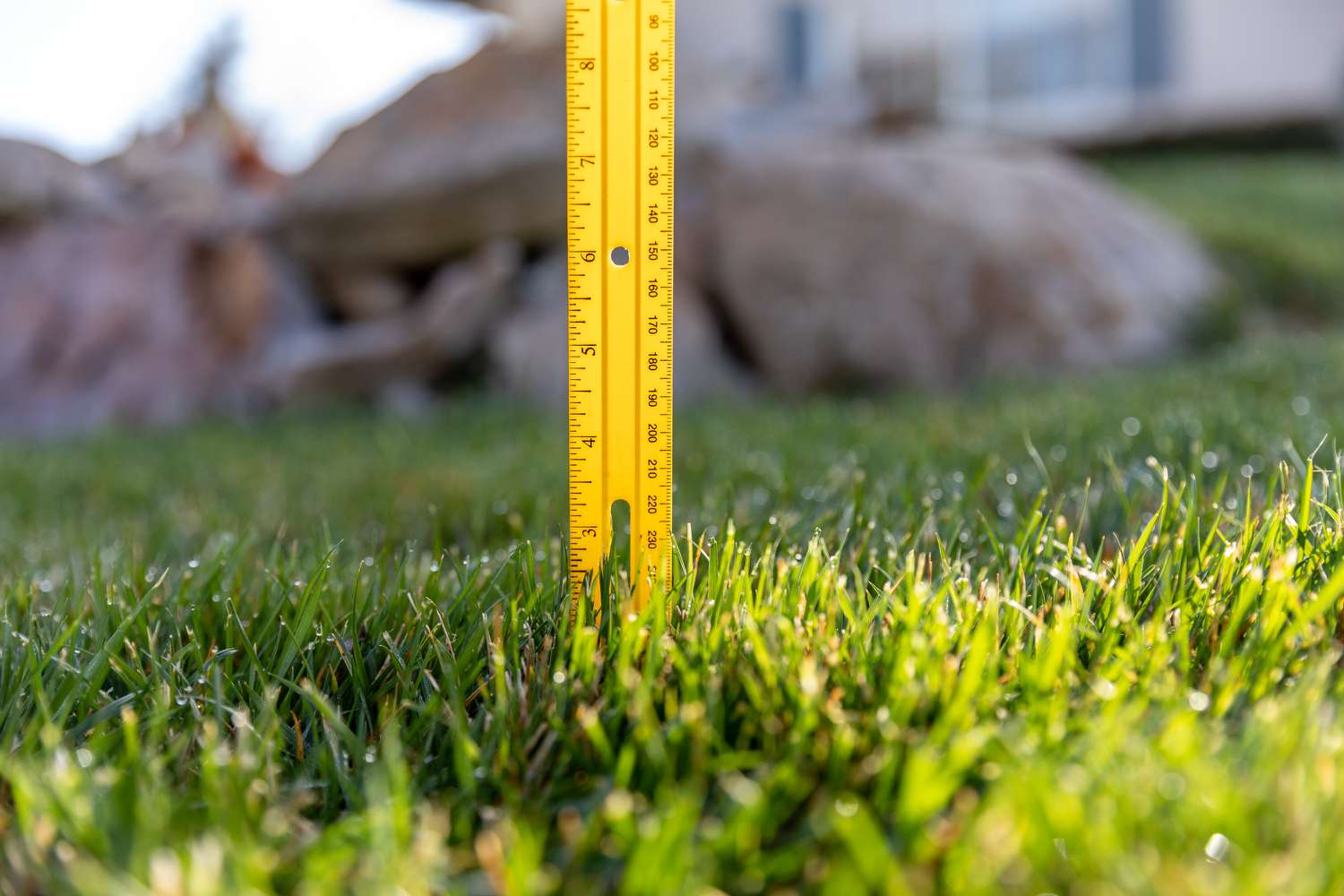
Don't mow until the grass is actively growing and at least 3.5 to 4 inches tall. Mowing too early in spring, when growth is just beginning, removes carbohydrate reserves the plant needs for root establishment after winter. Wait for consistent growth before starting your mowing schedule.
Peak Growth Season (May–June)
This is when most Ontario lawns grow fastest — 1 to 1.5 inches per week is typical. You'll likely mow every 5 to 7 days. Don't fight it with a shorter cut height — just mow more often and keep the deck at 3 to 3.5 inches.
Summer Slowdown (July–August)
Growth rate drops significantly. Many Ontario lawns only need mowing every 10 to 14 days in peak summer. If you mow on a fixed schedule and the lawn hasn't grown much, you're removing too much leaf material at once. Check growth rate, not the date.
Fall Rebound (September–October)
Cooler temperatures trigger a second flush of growth — sometimes nearly as fast as spring. Mowing frequency increases again. This is also the best time to overseed, so if you've scheduled fall overseeding, make sure to cut shorter (around 2.5 inches) immediately before the aeration and overseeding session.
Pre-Winter Wind-Down (Late October)
Growth slows dramatically. Mow when needed, cutting down to 2.5 to 3 inches for the final mow of the season. Don't leave the grass long going into winter — long grass mats under snow and invites snow mould.
Should You Mow After Rain?
Let the surface dry first. It doesn't need to be bone dry — just no standing water on blades and no muddy ruts forming under the mower wheels. Typically 1 to 2 hours after light rain in warm weather. After heavy rain, wait until the next morning.
The risk of mowing wet isn't just cosmetic (clumping clippings). If the soil is saturated and soft, the mower wheels create compression ruts that compact the root zone. Clay soils — common in Vaughan, Richmond Hill, and Markham — are especially vulnerable to compaction when wet.
When to First Mow a Newly Seeded or Sodded Lawn
New Seed
Wait until the new grass reaches at least 3.5 to 4 inches before the first mow. For most Ontario grass blends, that's 6 to 8 weeks after germination begins. The root system is shallow at this stage — mowing too early can pull seedlings out of the ground rather than cutting them. When you do mow, raise the deck and take off only the top half-inch to an inch. No bagging. No sharp turns.
New Sod
First mow at 3 to 4 weeks after installation, once the sod has knitted roots into the soil (you can't easily peel up a corner). Same rule applies: cut lightly, no sharp turns, avoid any stress until the root system is established.
Frequently Asked Questions
- University of Minnesota Extension: Lawns & Landscapes — mowing timing and temperature guidelines for cool-season grasses
- Lawn — Wikipedia — lawn grass biology and optimal mowing conditions
Let A&E Handle the Timing
Our crews mow at optimal times, with properly maintained equipment, adjusted for the season. Serving Richmond Hill, Vaughan, and Markham.