Most Ontario homeowners pick a mowing day and defend it like a personal philosophy. Tuesdays. Rain or shine. Whether the grass grew two inches that week or barely moved in July heat. The calendar is the wrong metric. Growth rate is the right one. In spring, weekly is barely enough. In July, weekly is too often. In fall, you're back to every 5 to 7 days — the grass decides the schedule, not the other way around.
Mow when the grass needs it, using the one-third rule — never remove more than one-third of the blade in a single cut. That means mowing frequency follows growth rate, which follows temperature and rainfall. In Ontario, that typically ranges from every 5–7 days in spring/fall to every 10–14 days in summer.
Mowing Frequency by Season in Ontario
Spring (April–May): Every 5–7 Days
Cool, moist spring conditions drive the fastest growth of the year. Kentucky bluegrass and ryegrass blends can grow 1.5 to 2 inches per week in May. If you're maintaining 3.5 inches, you need to mow before it hits 5+ inches — that's about every 5 to 7 days. Miss two weeks and you're cutting off half the blade, which triggers visible browning and stresses the root system.
One note: don't start mowing until the lawn is actually growing. Early April in Ontario is often still soggy and the turf is recovering from winter. Starting too early — especially on soft soil — compacts the root zone and creates ruts. Wait for consistent growth, not just a warm weekend.
Early Summer (June): Every 7 Days
Growth rate begins moderating as temperatures climb. Weekly mowing generally keeps pace. By late June, if the temperature is consistently above 25°C and rainfall is lower, growth slows toward the summer rate and you may be able to stretch to 8–9 days between cuts without violation of the one-third rule.
Peak Summer (July–August): Every 10–14 Days
Cool-season grasses slow significantly in heat. Some Ontario lawns in a dry July are barely growing — maybe half an inch per week. Mowing them weekly because "it's on the schedule" removes a disproportionate amount of leaf area. The lawn goes thin, pale, and stressed faster than it otherwise would.
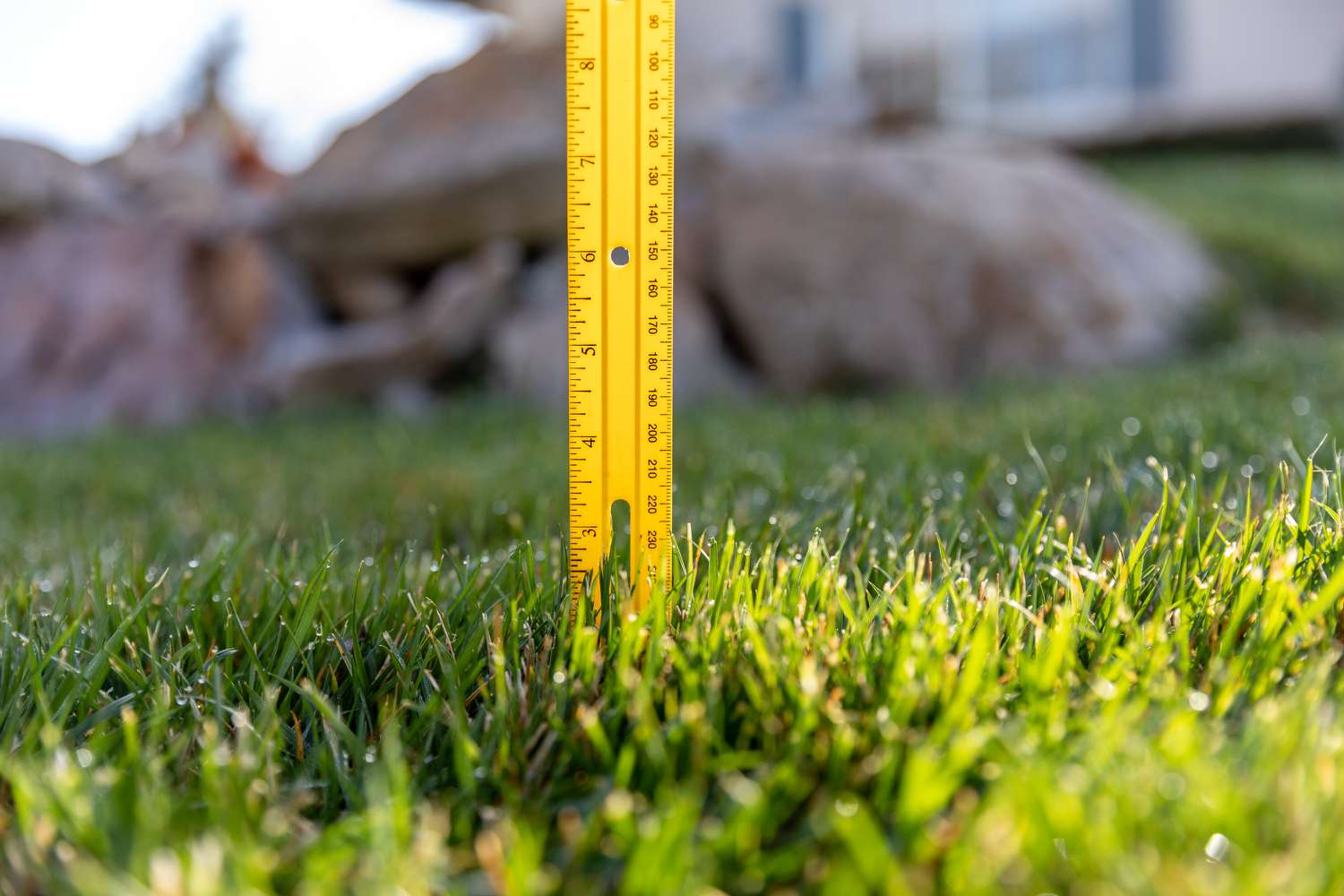
Cut every 10 to 14 days in July and August, or whenever the grass reaches 4.5 to 5 inches (if you're maintaining at 3.5 inches). Raise the deck to 4 inches in peak heat as well — more blade area means more photosynthesis and more shade on the soil.
Late Summer / Early Fall (September): Every 7 Days
September is one of the best months for Ontario lawns. Temperatures moderate, rainfall often increases, and cool-season grasses experience a second flush of vigorous growth. Growth rates can match May. Weekly or near-weekly mowing resumes. This is also the window for core aeration and overseeding — mow short immediately before the aeration session.
Fall (October): Every 7–10 Days, Then Wind Down
Growth slows progressively through October. Mow as needed, following the one-third rule. The last mow of the year should bring the lawn to 2.5 to 3 inches — lower than the summer height but not scalped. Mid-to-late October is typically the final mow in most parts of York Region, depending on the frost date.
Winter: No Mowing
Ontario cool-season grasses go dormant after frost. Do not mow dormant grass — there's no growth and the frozen crowns are vulnerable to mechanical damage. The last fall mow is the last mow until spring green-up, typically late April.
What Happens When You Over-Mow
Over-mowing — cutting more frequently than growth warrants, or removing more than one-third of the blade — gradually weakens the lawn over a full season. The visible signs are subtle at first:
- Pale or yellowish-brown cut tips that don't recover between mows
- Thinning density as the grass can't produce new tillers fast enough to replace lost material
- Increased weed germination, especially crabgrass, which thrives in thin, over-stressed turf
- Faster drought stress because the shortened root system can't access deeper soil moisture
Many homeowners blame poor fertilizer, wrong grass seed, or "bad soil" for these symptoms. Here's the honest truth: most Ontario lawn problems come down to mowing too short. Scalping — cutting below 2.5 inches — weakens root systems, increases water stress, and opens the door to weeds and disease. "Low and slow" works for barbecue. Not for grass. Three inches is the sweet spot for most Ontario lawns. The diagnosis takes five minutes: measure how often you're mowing and how tall the grass is when you start. If you're cutting 30% or more off the blade, that's the problem.
What Happens When You Under-Mow
The opposite problem — letting the lawn get too long between cuts — creates its own set of issues:
- When you do mow, you're forced to cut off too much at once (violating the one-third rule), causing visible stress and browning
- Tall, lush grass is more attractive to grubs, billbugs, and surface-feeding pests
- Overgrown sections mat down under their own weight, blocking light to lower growth
- Heavy clippings from long cuts smother the lawn surface rather than decomposing cleanly
If you've fallen behind and the lawn is significantly overgrown, don't cut to your target height in one pass. Cut by one-third, wait 3 to 4 days, cut by another third, repeat until you reach your target height. It takes an extra week but prevents the full scalping shock.
Ontario Mowing Frequency Quick Reference
| Month | Typical Growth Rate | Recommended Frequency | Notes |
|---|---|---|---|
| April | Slow–moderate | As needed (every 7–10 days) | Wait for consistent growth before first cut |
| May | Fast (1.5–2 in/wk) | Every 5–7 days | Peak spring growth; don't miss cuts |
| June | Moderate–fast | Every 7 days | Heat begins slowing growth by late June |
| July | Slow (0.5–1 in/wk) | Every 10–14 days | Raise deck to 4 in; skip if drought-stressed |
| August | Slow–moderate | Every 10–14 days | Growth picks up if rainfall resumes late Aug |
| September | Fast (1–1.5 in/wk) | Every 5–7 days | Second peak; ideal time for overseeding |
| October | Slowing | Every 7–10 days, then wind down | Final mow to 2.5–3 in before frost |
Frequently Asked Questions
- University of Minnesota Extension: Lawns & Landscapes — mowing frequency guidelines based on turf science research
- Lawn — Wikipedia — overview of lawn types and mowing science
Take the Guesswork Out of Mowing
A&E Lawn Care handles seasonal frequency adjustments automatically — more cuts in spring and fall, scaled back in summer heat. No over-mowing. No neglected weeks.