The backyard is where most Ontario homeowners actually spend time. The front yard is for the street — the backyard is for you. Which makes it the more important design project and, usually, the one that gets done last. The builder-grade backyard formula — fence, grass, one square concrete pad — works as a starting point. It doesn't have to be the ending point.
This guide covers practical backyard landscaping ideas across every budget and yard size: hardscape (patios, paths, retaining walls), privacy screening, planting strategies, and lawn improvements. These are ideas that hold up in Ontario's climate — not magazine concepts that require a subtropical environment and a full-time gardener.
- Start with hardscape, end with planting. The permanent infrastructure defines everything else — get the bones right first.
- Privacy screening is the single highest-return backyard investment for most Ontario properties. Cedar hedges, board-on-board fencing, and tall ornamental grasses all work differently but solve the same problem.
- Patio sizing rule: whatever size you think you need, go 25% bigger. Furniture takes more space than it looks in the showroom.
- A defined lawn edge makes a mediocre lawn look maintained and a good lawn look exceptional.
- Native plants in backyard beds massively reduce long-term maintenance — they've already adapted to Ontario's climate.
Backyard Hardscape Ideas
The patio: your starting point
If your backyard has a single square of concrete poured by the builder, you have a functional but unfinished space. Extending or replacing that pad with natural stone, interlock, or poured concrete opens the yard up and creates a proper outdoor living area. For a family of four, a 16 x 20 foot patio (320 sq ft) is the minimum to feel genuinely usable with a table, chairs, and a BBQ. Most builder pads are 10 x 12.
Material choices for Ontario: natural flagstone (high-end, irregular, beautiful, slightly more maintenance), interlock/permeable pavers (durable, wide range of looks, industry standard in GTA), exposed aggregate concrete (lower cost, clean look, permanent). All three handle freeze-thaw cycles well if properly installed on a compacted granular base — that's the key. Skip the base and every patio fails eventually.
Paths and connections
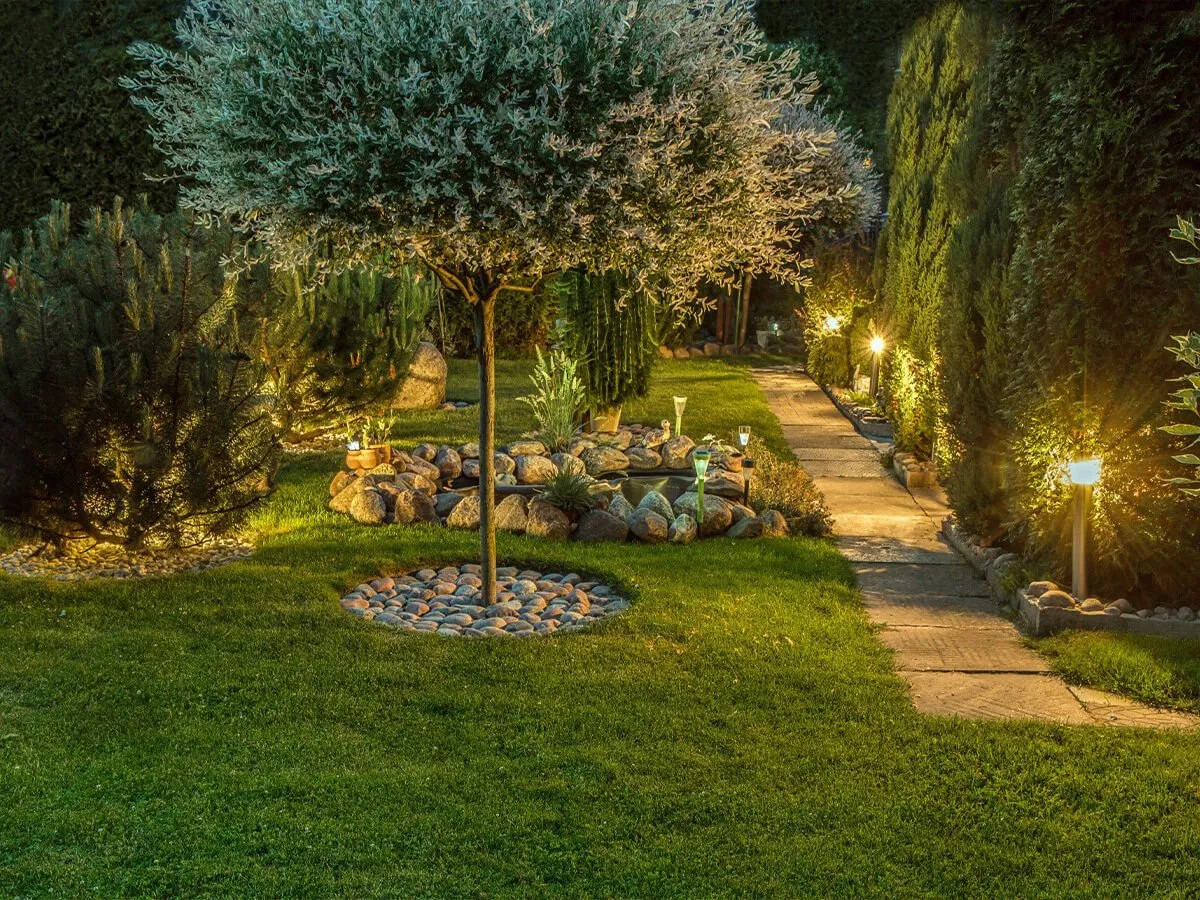
A backyard without defined paths reads as unfinished. Even simple stepping stone paths — connected from the patio to the back gate, to the garage, to the garden shed — create structure and make the yard feel navigable. Stepping stones set in ground cover (creeping thyme, creeping Jenny) or gravel look better than concrete pads and cost a fraction of formal paving.
Retaining walls
For sloped backyards — common in older Richmond Hill neighbourhoods built on ravine lots — retaining walls are often structural necessities as well as design opportunities. A properly built interlock retaining wall creates usable flat space on a slope, provides visual interest, and solves drainage issues that arise when water runs toward the foundation. Build them right (compacted base, drainage aggregate behind the wall, geogrid where needed) or not at all — failing retaining walls are expensive repairs.
Fire pit or outdoor fireplace area
A stone or interlock fire pit pad with a defined seating circle is one of the more affordable hardscape additions and adds more functional use to the yard than almost anything else. The key is giving it its own defined space — a circular or square pad at least 12 feet in diameter with the fire feature centered — rather than dropping a portable fire pit on an existing patio where it becomes a tripping hazard.
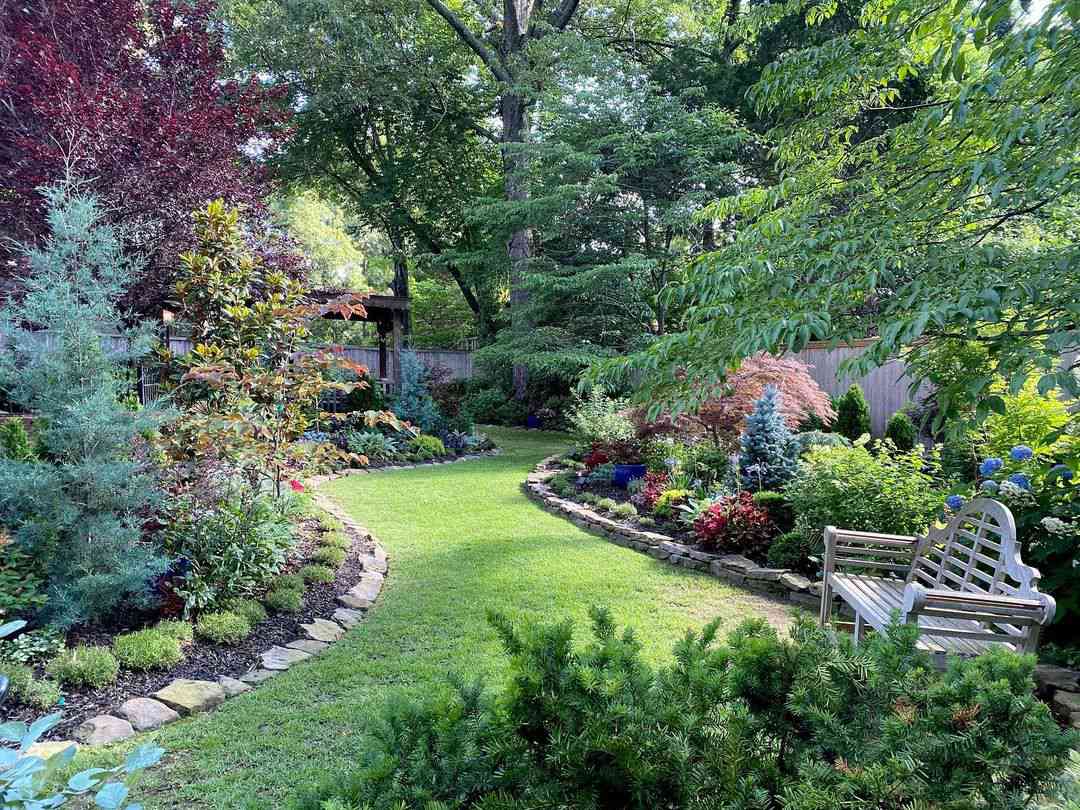
Privacy Screening Ideas for Ontario Backyards
Privacy is the most-requested backyard project we handle in Richmond Hill, Vaughan, and Markham — and rightfully so on standard residential lots where houses are 6–10 metres apart. Options from most permanent to least:
Cedar hedges
The GTA standard for a reason. Thuja occidentalis (Eastern white cedar) handles Ontario winters reliably to Zone 3, grows 1–2 feet per year under good conditions, and creates a dense, living wall. Plant at 3 feet apart for a solid screen within 3–5 years. Maintain at the height you want — let it go and you'll have a 20-foot hedge in 15 years. Requires annual trimming to maintain shape and density.
Board-on-board or shadowbox fencing
For full privacy without a 5-year wait, a proper wood or composite fence to the property line works immediately. Board-on-board (fence boards overlapping) provides complete privacy; shadowbox (alternating panels on each side of the rail) looks better from both sides and allows air movement. Both require proper post depth (minimum 4 feet in Ontario's frost zone) and gravel at the post base for drainage.
Ornamental grasses and tall perennials
Karl Foerster feather reed grass, miscanthus, and calamagrostis reach 4–6 feet by midsummer and provide soft screening through the growing season. Less permanent than fencing or hedges but much faster to establish than cedars and far cheaper. Work well along fence lines to add layered screening and visual interest.
Pergola and climbing plants
A cedar pergola along a fence or patio edge, planted with climbing hydrangea (slow but worth it), native Virginia creeper, or hardy clematis creates overhead privacy and shade while adding significant architectural interest to the space. Takes 2–4 years to establish — patience required, results are exceptional.
Backyard Planting Ideas
The foundation bed
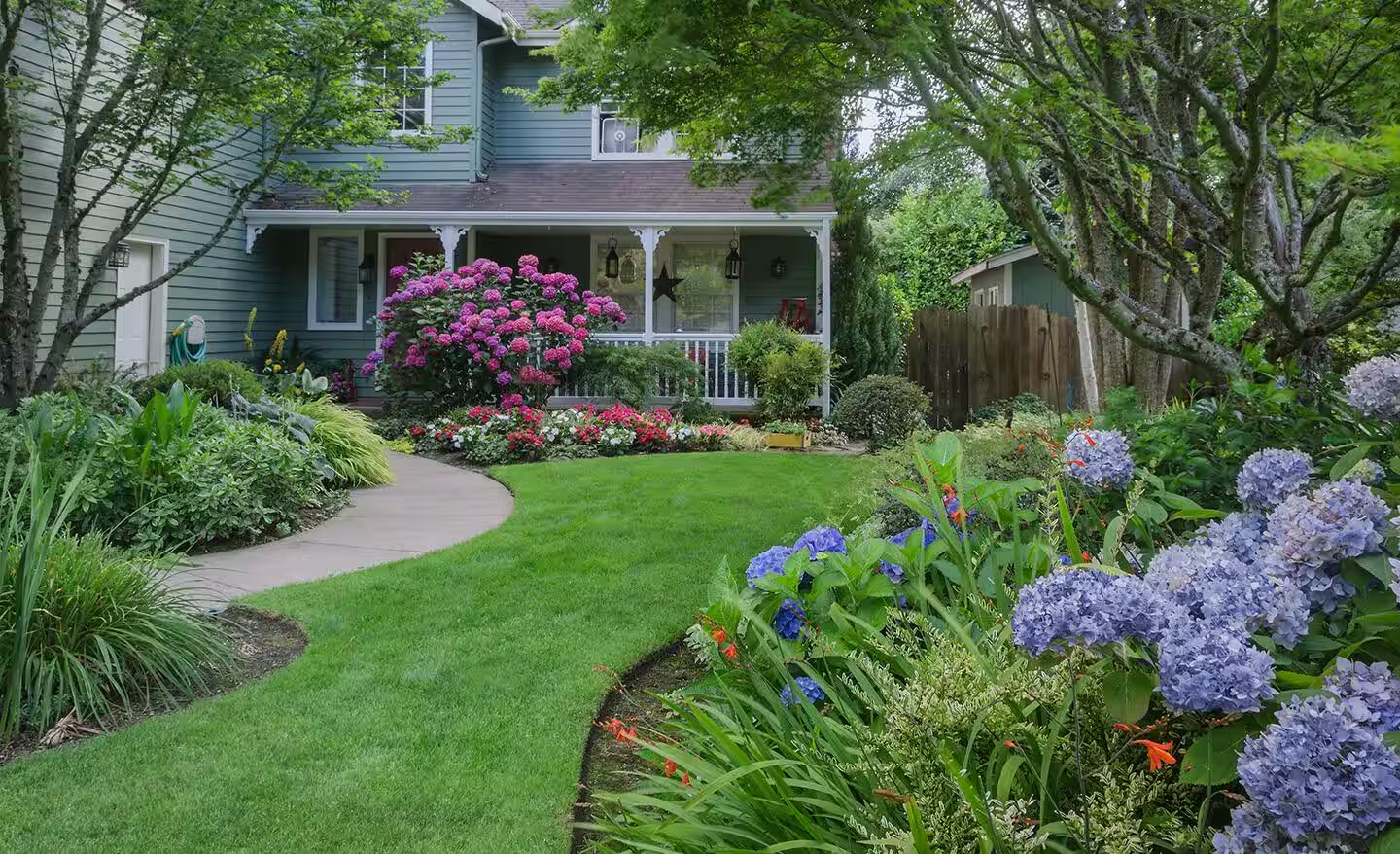
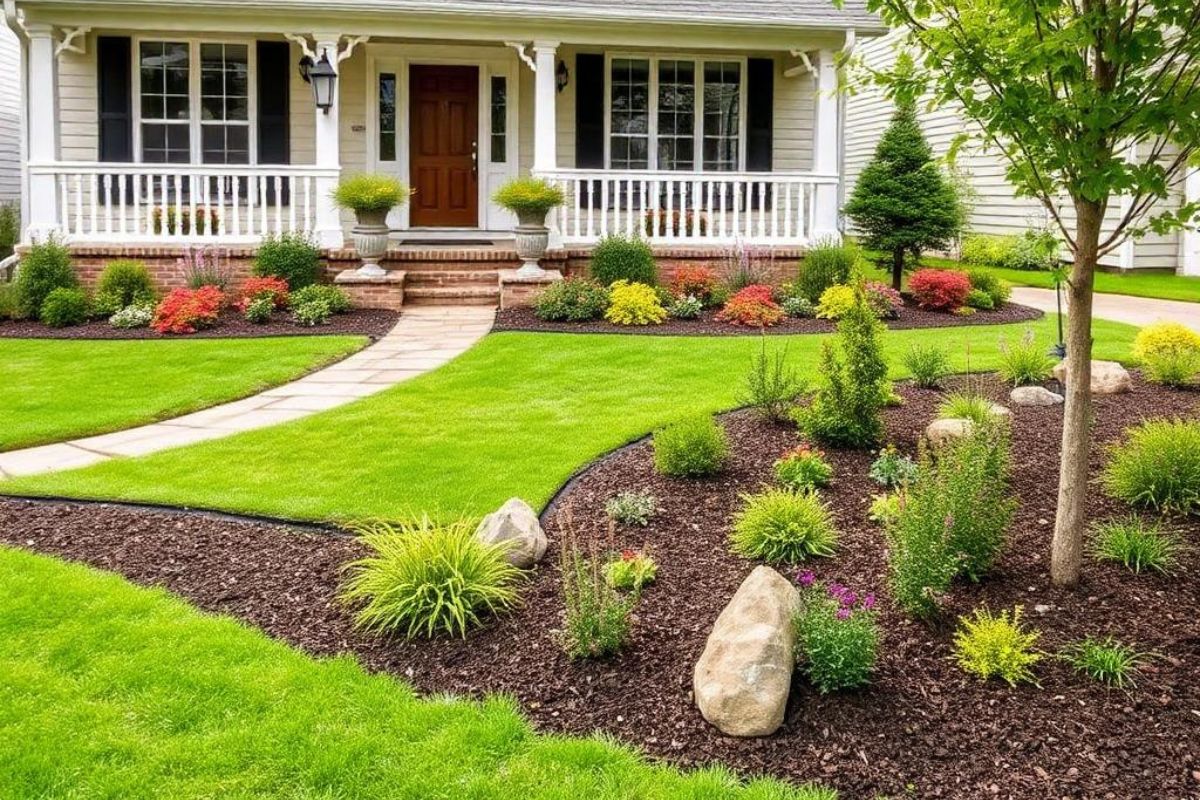
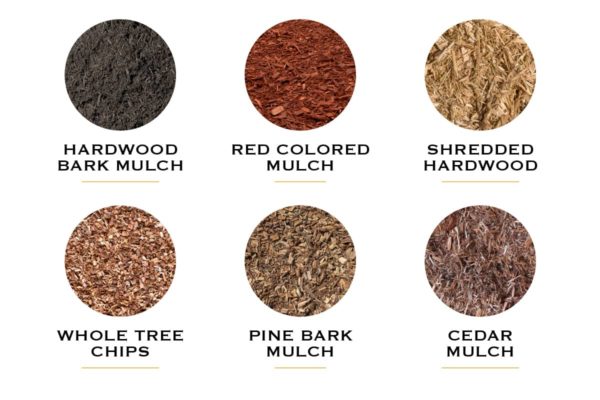
Perimeter beds along the fence line are where most backyard planting goes. Keep beds a minimum of 3–4 feet deep — anything narrower looks like an afterthought. Fill the back layer with your screening plants or structural shrubs, mid layer with 2–4 foot perennials, front edge with groundcover or low ornamentals. Add mulch 2–3 inches deep through the bed — it suppresses weeds, retains moisture, and makes the whole bed look finished immediately.
Shade-friendly planting
Most Ontario backyards have significant shade from neighbouring houses and mature trees. Work with it: hostas, astilbe, coral bells, and ferns thrive in part to full shade and provide lush summer foliage. Creeping Jenny and pachysandra work as groundcover in deep shade where grass won't grow. Fighting shade with sun-loving plants is expensive and usually futile.
The low-maintenance native approach
For backyard beds you want to maintain without constant effort: native perennials are the answer. Black-eyed Susan, coneflower (echinacea), wild bergamot, and Joe-Pye weed are Ontario natives that require no supplemental watering once established, need no spraying, and reseed lightly to fill gaps over time. They also support pollinators. One-time planting investment, years of low-effort colour.
Backyard Lawn Ideas
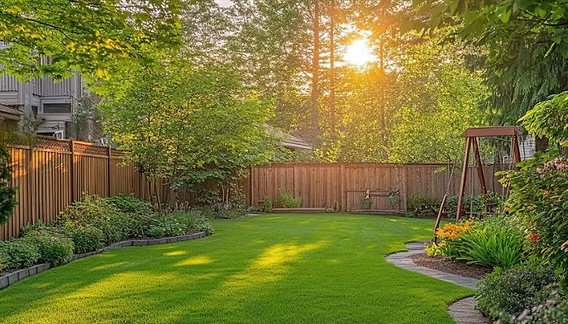
Not every backyard needs a traditional grass lawn, but for families with kids and pets, it remains the most functional surface for the money. The key is maintaining it well enough that it doesn't make the rest of the landscaping look worse by contrast.
If your backyard lawn is thin and struggling under shade and compaction, the two-step fix is: core aeration in fall followed by overseeding with a shade-tolerant fescue blend. This doesn't produce golf course results in a single season, but it meaningfully improves density over 2–3 years without killing the bank.
If the lawn is genuinely failing — dead under trees, full of moss, persistent bare patches — switching those areas to groundcover (ajuga, pachysandra, vinca) or mulch rings is a better long-term decision than re-seeding the same spot every year. Know when to change the approach.
Frequently Asked Questions
Ready to Redesign Your Backyard?
We handle backyard landscaping projects across Richmond Hill, Vaughan, and Markham — from bed cleanups to full hardscape and planting installations.
- University of Minnesota Extension: Yard & Garden — plant selection and landscape guides for northern climates
- Landscape Design — Wikipedia — principles and history of residential landscape design