Every spring, Ontario homeowners overseed the dead patch under their Norway maple. Every summer, it dies back. Every fall, they do it again. We've seen this on hundreds of properties. At some point, fighting a tree for its own root zone stops being lawn care and starts being a commitment. The area under a mature tree is not a grass problem — it's a different problem entirely, with better solutions.
The foundational principle
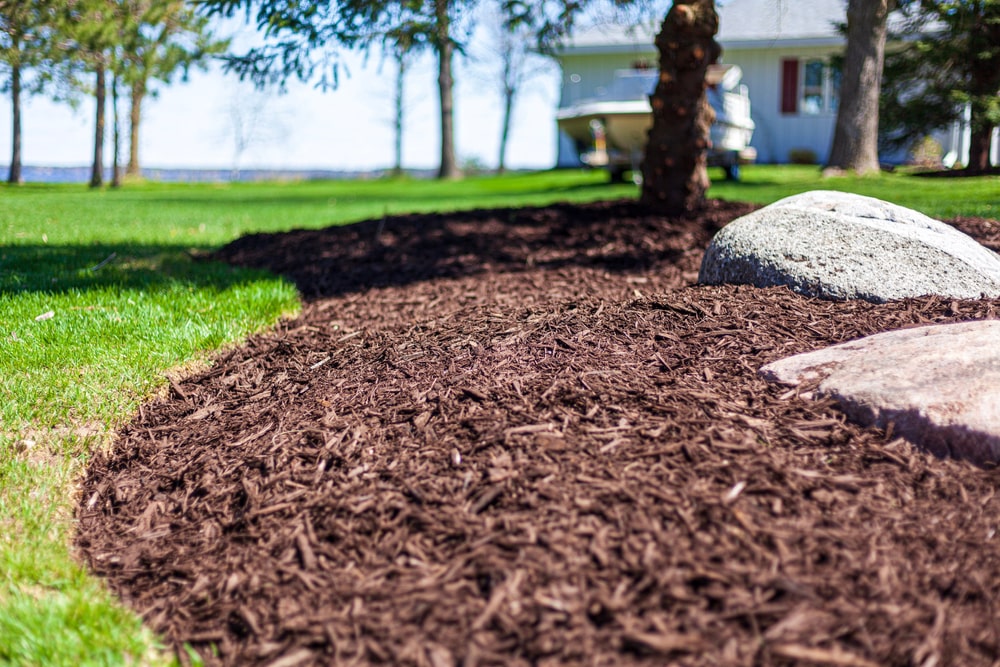
Work with the shade and root competition that trees create, not against it. The right approach combines a proper mulch ring (3–4 inches from the trunk, 3 feet or more in radius) with shade-tolerant plants selected for the specific conditions under that tree. Don't force it — read what the space will support.
Why Grass Fails Under Trees — and Why That's Fine
Lawn grass fails under trees for overlapping reasons: shade limits photosynthesis, tree roots compete aggressively for water and nutrients, and the soil under established trees is often dense, dry, and low in the fine organic matter that grass roots need. The more established the tree, the more extreme these conditions become.
Many Ontario homeowners spend years overseeding the area under their Norway maple or silver maple, watching it take hold in spring and die back by August, and repeating the cycle. This is winnable but not efficiently — a ground cover or mulched bed uses that same effort once and then maintains itself with minimal input. Choosing the right solution for the space beats winning an annual battle against biology.
Start With a Proper Mulch Ring
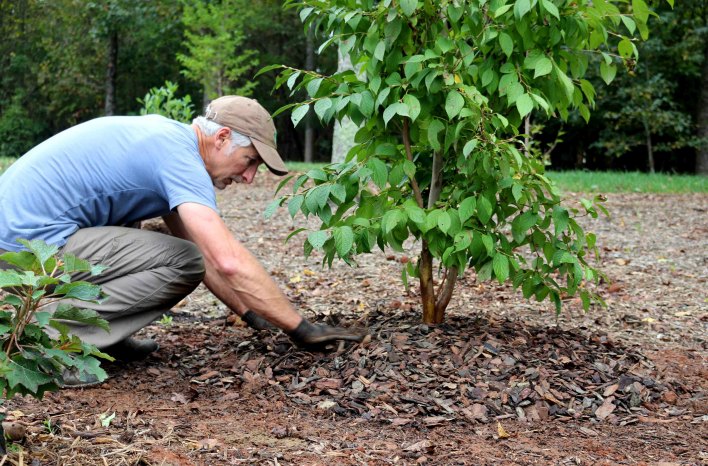
Before any planting, every tree benefits from a mulch ring. It's the highest-value, lowest-effort improvement available for tree health:
- Eliminates mower and trimmer damage to the root flare and lower bark (a primary cause of premature tree decline in residential landscapes)
- Retains moisture in the root zone — critical in Ontario's dry July and August
- Moderates soil temperature extremes at the root zone
- Suppresses competing weeds and grass that draw resources away from the tree
- Adds organic matter to the soil as it decomposes
Size matters. A mulch ring that extends at least 3 feet out from the trunk on all sides provides meaningful benefit. Ideally, extend to the drip line (the outer edge of the canopy) — this covers the full active root zone. For large trees in residential settings, even a 2–3 foot radius ring is far better than none.
Apply 2 to 3 inches of shredded hardwood or wood chip mulch. Keep it at least 4 to 6 inches back from the trunk — no volcano-piling against the bark. See the mulch installation guide for full instructions.
Ground Covers for Under Trees in Ontario
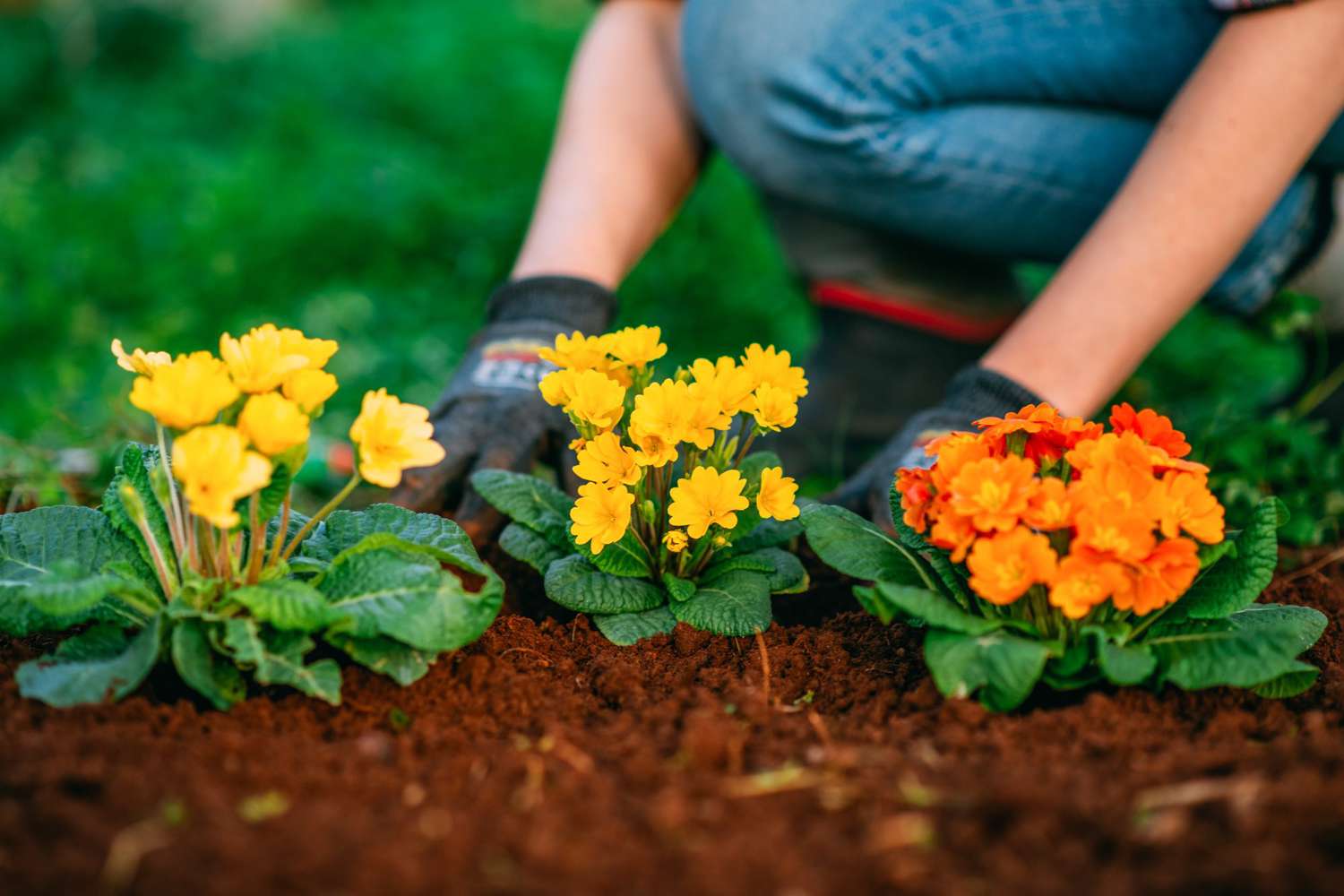
Ground covers are the best plant solution for most under-tree areas. They're low-growing, spread to fill the space, require minimal maintenance once established, and include many species adapted to dry shade — the dominant condition under mature Ontario trees.
Hostas
The most reliable shade-tolerant perennial in Ontario. Hostas tolerate dry shade better than almost any other ornamental perennial, compete reasonably with tree roots, and provide genuine visual interest through foliage size, colour, and texture variation. Available in sizes from 6-inch miniatures to 3-foot clumps. Plant in groups of 3 to 5 for visual mass. Avoid variegated hostas under heavy Norway maple shade — they need some indirect light to colour well.
Pachysandra (Japanese Spurge)
A spreading evergreen ground cover that's nearly indestructible under tree shade. Once established, it forms a dense, weed-suppressing mat 20–25 cm tall. Very low maintenance. The trade-off: it spreads aggressively and can be difficult to remove once established. Plant it where you want a permanent, no-maintenance solution, not in a bed where you might change your mind.
Vinca Minor (Periwinkle)
Low-growing trailing ground cover with small dark green leaves and spring blue-purple flowers. Good in partial to full shade. Like pachysandra, it spreads and forms a mat but is somewhat easier to control than pachysandra. Handles Ontario winters well.
Epimedium (Bishop's Hat)
A tougher-than-it-looks perennial ground cover that handles the combination of dry shade and root competition better than most plants. Semi-evergreen in Ontario (foliage persists through winter, often with burgundy-bronze tones). Slower to spread than vinca or pachysandra, but worth the patience for difficult dry shade spots.
Wild Ginger (Asarum canadense)
A native Ontario species that grows naturally on forest floors — which is effectively what the understory of a mature maple or oak is mimicking. Large, heart-shaped leaves form a low dense mat. Excellent for a naturalistic, native-plant garden aesthetic. Slow spreader but durable once established.
Ferns
Ostrich fern, cinnamon fern, and lady fern all perform well in moist to average shade. Under trees where the soil retains some moisture, ferns add height variation (ostrich fern reaches 90–120 cm) and a woodland character that complements mature tree canopies. Avoid ferns in the driest, most root-competitive spots — they need at least moderate moisture.
Shade-Tolerant Flowering Perennials for Tree Borders
If the mulch ring is large enough to accommodate some planting, these perennials provide seasonal interest beyond foliage ground covers:
- Astilbe: Mid-summer plumes in white, pink, red, or purple. Needs moisture — best under trees that allow reasonable soil moisture retention.
- Bleeding Heart (Dicentra): Spring-flowering perennial with heart-shaped blooms; goes dormant by midsummer. Pair with hostas to fill the summer gap.
- Coral Bells (Heuchera): Grown primarily for foliage (colours ranging from lime green to deep burgundy). Tolerates partial to full shade and adds year-round colour variation.
- Solomon's Seal (Polygonatum): Arching stems with paired leaves and small white spring flowers. Native-adjacent, graceful, and highly adaptable to shade and root competition.
What Not to Plant Under Trees
- Turf grass — as discussed above, it fights the conditions and rarely wins long-term. Save the effort.
- Annual beds — annual planting requires soil disturbance, which damages tree roots repeatedly. Perennial plantings or ground covers are far better under trees.
- Shallow-rooted trees or shrubs immediately adjacent — additional woody root competition in the root zone of a mature tree stresses both plants. Keep shrub plantings at the outer edge of the drip line or beyond.
- Plants needing high sun — lavender, rosemary, sedums, and most ornamental grasses won't perform under a dense canopy. Plant these in open bed areas.
Defining the Tree Ring Edge
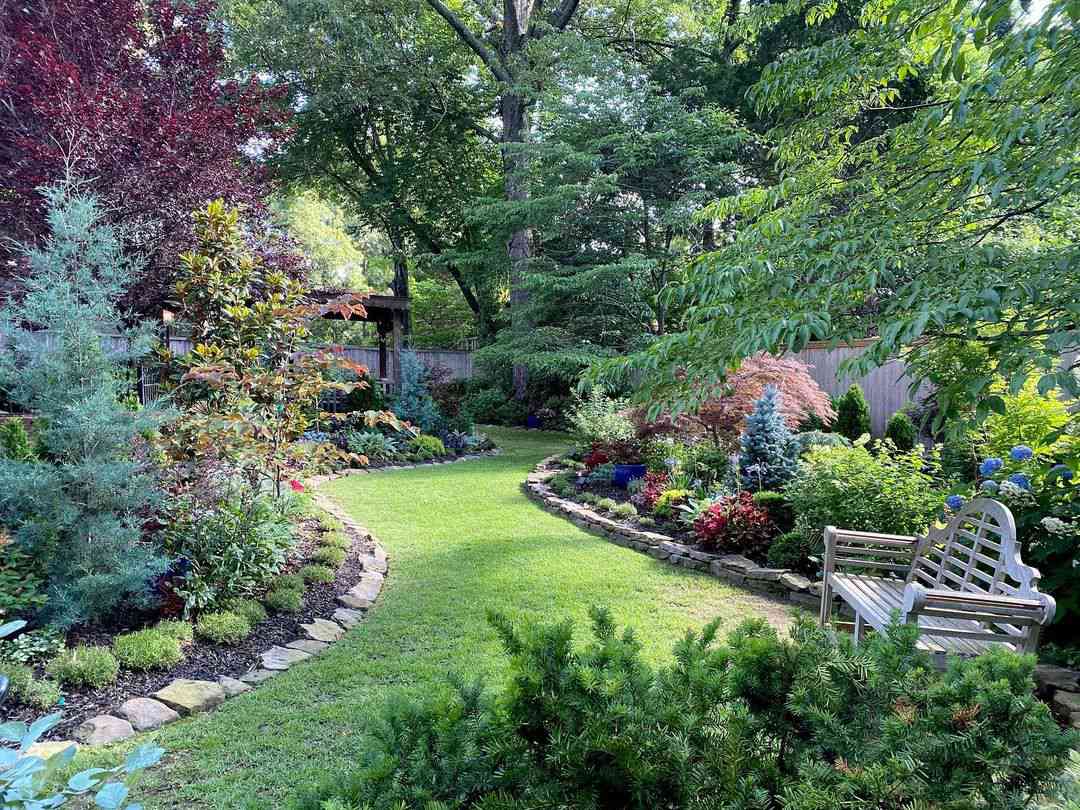
A well-defined edge transforms a mulch ring from "patch of mulch" to a deliberate landscape feature. Options:
- Spade cut: The cleanest and least expensive — a sharp half-moon or spade edger creates a 3–4 cm trench that defines the edge. Requires annual maintenance to keep the edge from grassing-in.
- Metal edging: Cor-Ten steel or black aluminum edging creates a permanent, low-visibility border between the mulch ring and the lawn. The most professional-looking solution with lowest ongoing maintenance. Requires installation effort once.
- Natural stone border: Fieldstone, cobblestone, or decorative stone circles add a visual element but require more careful installation (level setting in soil) to avoid heaving in Ontario freeze-thaw cycles.
- Brick: Similar to stone — decorative but requires careful installation to stay level through winter.
Avoid plastic edging for circular tree rings — it heaves over winter and looks cheap by season three. Metal edging is the practical premium choice.
Frequently Asked Questions
It's possible in the outer portion of the ring where root density is lower, but annual planting requires soil disturbance that damages fine feeder roots each time. A better option for colour under trees is a small grouping of shade-tolerant annuals (impatiens, begonias) in a single area at the edge of the mulch ring, planted once in late May and allowed to fill out. Don't dig repeatedly into the root zone of a mature tree.
Norway maple is notorious for creating extreme dry-shade competition conditions. The most reliable choices are pachysandra and epimedium — both handle the combination of dense shade and aggressive root competition better than most plants. Hostas work in moderate Norway maple shade but can struggle under the densest canopies. If nothing establishes, an expanded mulch ring (to the drip line) is a completely valid and low-maintenance solution — it's visually clean and benefits the tree.
Keep plants at least 30–45 cm from the trunk base. Closer than that, the soil disturbance from planting damages the root flare, and the plants are competing in the most nutrient-depleted zone. The trunk base should stay clear (just mulch, keeping mulch back 4–6 inches from the bark). Plants start well into the mulch ring, not at its centre.
Minor soil disturbance for planting individual perennials or ground covers at appropriate depth is unlikely to damage a healthy, established tree. The risks to avoid: large-scale soil regrading (adding more than 5–7 cm of soil over the root zone changes drainage and oxygen availability), deep digging that cuts significant roots, and installing features (walls, beds) that change water movement at the base of the tree. Careful hand-planting of perennials is low-risk for the tree.
- University of Minnesota Extension: Trees & Shrubs — tree care and root zone management guides
- Arborist — Wikipedia — tree care science and arborist practices
Transform Your Under-Tree Areas
A&E Lawn Care designs and installs mulch rings, ground cover plantings, and tree bed edging. Serving Richmond Hill, Vaughan, Markham, and Aurora.