People form an impression of your home in about three seconds from the street. Most of what's happening in those three seconds is your front yard. The grass, the beds, the mulch, the edges — it all signals either "this place is cared for" or "the owners are very busy." The good news: you don't need a massive budget or a blank slate to shift that impression dramatically.
This guide covers practical front yard landscaping ideas organized by budget and effort level — from a $200 weekend refresh to a full landscape installation — with a focus on what actually works for Ontario homes and GTA growing conditions.
- Fresh mulch in beds is the single highest-impact, lowest-cost curb appeal upgrade.
- Clean edging along walkways and bed borders makes everything look intentional.
- Three plants of three types — a simple planting rule that always looks polished.
- Symmetry around the front door draws the eye to the entrance.
- Low-maintenance perennials look great year after year without replanting.
Where to Start: The 3-Element Framework
Before picking specific plants or materials, think in three layers. Every well-designed front yard has all three working together:
- Structure — the bones of the landscape. Defined bed edges, walkway borders, and hardscape elements (low stone walls, stepping stone paths, decorative gravel). Structure is what makes a landscape look "designed" rather than random.
- Anchor plants — taller shrubs and small trees that give visual weight and year-round presence. In Ontario: Japanese maples, boxwood, yews, ornamental grasses, and dwarf conifers all work well.
- Fill and ground cover — lower plants, perennials, and mulch that fill the spaces between anchors. This layer adds colour, texture, and seasonal interest.
Most front yards that look disappointing are missing one or two of these. A lawn with some scraggly foundation shrubs has no structure and no fill. A yard with elaborate hardscape and no plants looks like a parking lot in progress. Get all three working together — even at a modest scale — and the difference is dramatic.
Low-Budget Ideas ($200–$800)
1. Fresh Mulch in All Beds
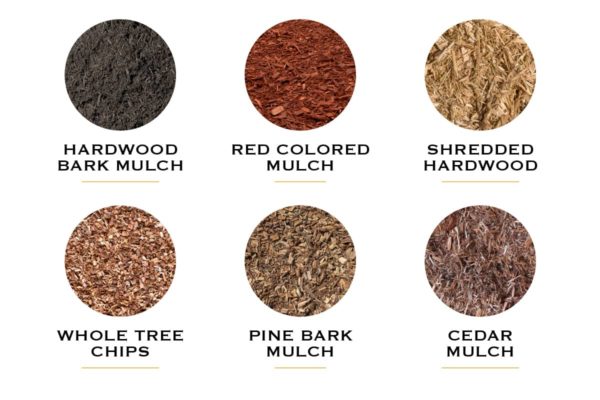
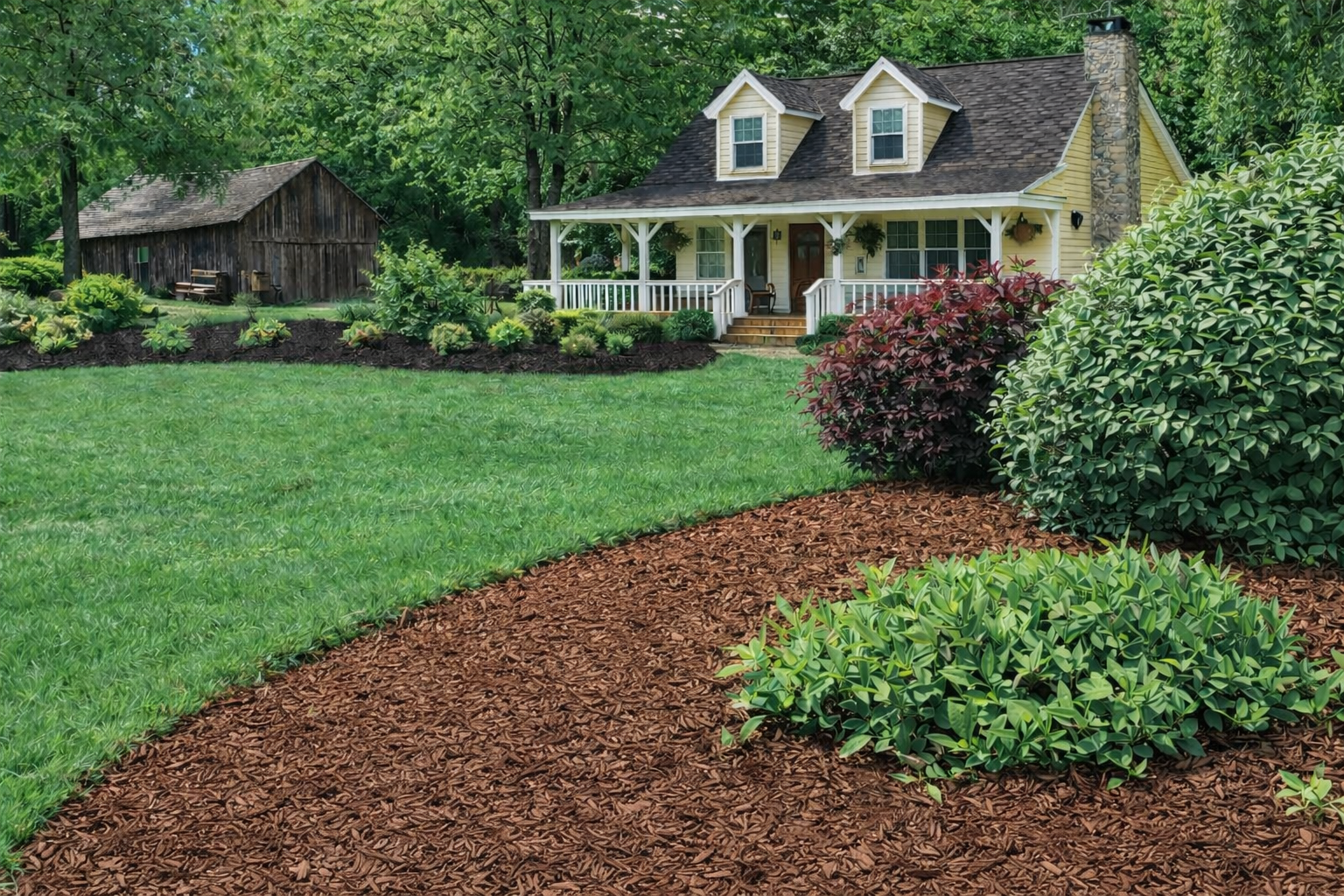
If you do nothing else, do this one. A fresh 2–3 inch layer of cedar or hardwood mulch in foundation beds is the single highest-return, lowest-effort curb appeal move available to you. It covers bare soil and faded old mulch, makes every plant pop visually, and signals immediately that the property is cared for. A typical Richmond Hill home with 200–300 sq ft of front beds needs roughly 2–3 cubic yards of mulch — a $150–$250 investment that changes how the whole house reads from the street.
2. Define Your Bed Edges
Soft, undefined edges where lawn grass bleeds into garden beds look sloppy. Clean, defined edges — whether cut with a half-moon edger or installed with black steel or composite edging — make everything look intentional. This is a DIY weekend project that costs $50–$150 in materials and returns 10× in visual improvement.
3. Foundation Planting Refresh
Overgrown, shaggy, or mismatched foundation shrubs are one of the most common curb appeal problems in older Ontario neighbourhoods. The fix: prune aggressively in spring, remove anything that's hopelessly overgrown, and add 2–3 compact, low-maintenance shrubs. Compact boxwood, dwarf Korean lilac, or Little Lime hydrangea (all zone 5b-hardy) are excellent choices for Richmond Hill and Vaughan.
4. Add a Focal Point at the Entrance
A pair of matching urns, a Japanese maple in a prominent location, or boxwood spheres flanking the front door immediately elevates the entrance. Symmetry around the front door is one of the oldest and most reliable design principles — it signals intention and creates a welcoming focal point.
Mid-Budget Ideas ($800–$3,000)
5. Expand and Redesign Bed Shapes
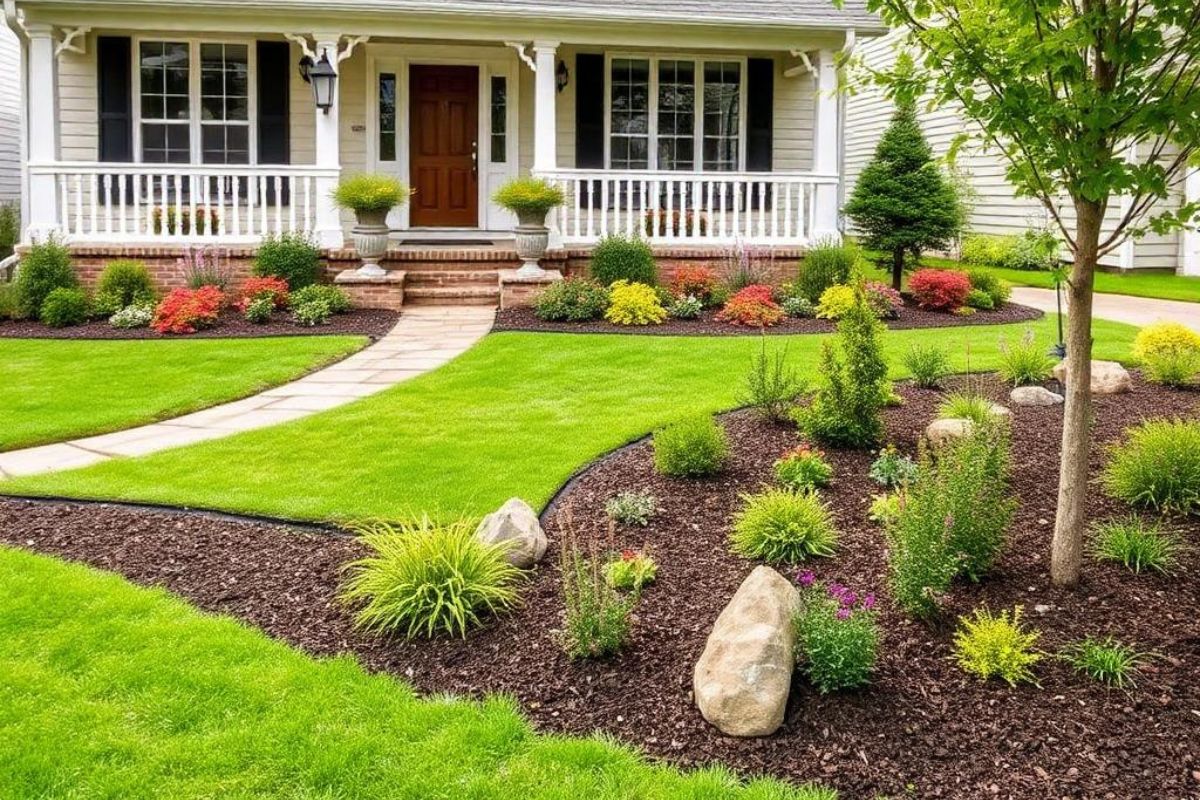
Straight, boxy foundation beds look dated. Softly curved beds that flow from the house toward the lawn create a more natural, contemporary look. Use a garden hose to lay out the curve before you cut — you can adjust it until it looks right before committing. Remove the existing lawn within the new bed shape with a sod cutter (rentable) or smother with cardboard and mulch over winter.
6. Walkway Upgrade or Stepping Stone Path
A concrete walkway that's stained, cracked, or plain is an eyesore. Options: a professional concrete refresh with a surface treatment, flagstone or paver overlay, or a stepping stone path through a planted area. A winding stepping stone path from the driveway to the front door, set into low ground cover, is a classic that works with almost any house style.
7. Ornamental Tree as a Focal Point
A single, well-placed ornamental tree can transform a flat, boring front yard. Best options for Ontario front yards: Autumn Blaze maple (reliable fall colour), Serviceberry (spring flowers + berries + fall colour), or a Japanese maple in a protected spot. Position it off-centre, roughly 10–15 feet from the house, to create visual interest without blocking the front.
8. Low-Maintenance Perennial Bed
Replace high-maintenance annual beds (that need replanting every spring) with a mix of hardy perennials and ornamental grasses. A well-planned perennial bed looks better every year as plants mature and fills itself in. Good Ontario choices: Karl Foerster grass, Endless Summer hydrangea, Black-eyed Susan, Coneflower, and Siberian iris — all low-maintenance once established.
Full Landscape Redesign ($3,000+)
9. Front Garden Landscape Design
A full front yard landscape design involves a professional laying out a cohesive plan — bed shapes, hardscape, plant selection, drainage, and seasonal interest — as an integrated whole. This is the approach for homes where the front needs a total rethink rather than incremental improvements.
Key elements of a full front landscape design:
- Graded, level soil with proper drainage away from the foundation
- Designed bed shapes that complement the architecture
- Layered planting plan (tree → shrub → perennial → ground cover)
- Hardscape: walkway, front step landing, possibly a low border wall
- Edging throughout for a finished look
- Mulch installation
10. Landscaping for Small Front Yards
Small front yards in dense neighbourhoods — townhouses and semis are common in Vaughan and Markham — benefit most from vertical elements (tall, narrow plants or climbing plants on trellises), mirrors in planting design (symmetrical beds on either side of the path), and high-contrast planting that looks bold at small scale. Less is more: a few well-chosen plants properly mulched look better than a crowded mix of small plants.
11. The 80/20 Rule for Curb Appeal on a Tight Budget
If budget is the primary constraint, concentrate resources on what's visible from the street. The 80/20 rule applies strongly here: 80% of the impression comes from 20% of the work. Fresh mulch + clean bed edges + one focal point near the entrance. That combination, done well, covers most of what visitors and buyers actually notice. Don't spread a limited budget thin across the whole yard. Nail the front face first.
Best Plants for Ontario Front Yards
Plants that look great and survive GTA winters (Zone 6a/5b):
- Shrubs: Compact Burning Bush, Dwarf Korean Lilac, Little Quick Fire Hydrangea, PJM Rhododendron, Boxwood (sheltered spots), Spirea, Ninebark
- Ornamental grasses: Karl Foerster Feather Reed Grass, Shenandoah Switchgrass, Morning Light Miscanthus
- Perennials: Black-eyed Susan, Coneflower (Echinacea), Daylily, Siberian Iris, Salvia, Catmint
- Ground covers: Creeping Phlox, Creeping Jenny, Ajuga, Pachysandra (shade)
- Small trees: Serviceberry (Amelanchier), Ornamental Crabapple, Japanese Maple (protected), Ivory Silk Lilac
Much of Richmond Hill, Vaughan, and Markham is built on Zone 6a soil with heavy clay subsoil. Avoid plants that need excellent drainage in heavy clay (most lavenders, for example). Amending bed soil with compost before planting significantly improves results, especially in newer subdivisions where topsoil is often shallow.
Landscaping in Front of the House: Foundation Bed Rules
Foundation beds — the planted area directly against the house — are the most visible and most commonly mishandled part of a front yard. Key rules:
- Keep plants away from the foundation: plant the closest shrubs 2–3 feet from the house to allow for growth and air circulation.
- Vary heights: a flat row of same-height shrubs looks like a parking lot hedge. Use a combination of taller anchors (3–5 ft) and shorter fillers (1–2 ft) for a natural, layered look.
- Leave room for growth: plant what the mature size requires, not what looks full on day one. Young shrubs planted at the right spacing look sparse for 2–3 years but avoid the congested mess 10 years later.
- Mulch properly: 2–3 inches, never touching the house siding or window trim.
Frequently Asked Questions
- University of Minnesota Extension: Yard & Garden — curb appeal and plant selection guides for northern climates
- Front Yard — Wikipedia — history and design of residential front yards
Front Yard Landscaping in Richmond Hill & Vaughan
A&E Lawn Care designs and installs front yard landscapes across Richmond Hill, Vaughan, and Markham — from foundation bed refreshes to full redesigns. Get a free quote and see what's possible.