Mulch colour sounds like one of those decisions that can't go wrong. It can go wrong — specifically when the colour fades unevenly six months later, or clashes with a home exterior you didn't think to factor in. The right choice depends on your home's materials, your plants, and how much you care about annual refreshing. This guide covers the three main options — black, dark brown, and red — so you can pick one and stop second-guessing it all summer.
Starting point
Dyed mulches (black, red, brown) use iron oxide or carbon-based dyes that are generally considered safe for plants and soil. The dye fades over one to two seasons. If colour longevity matters to you, natural cedar or hardwood without colouring will hold its tones longer as it weathers gracefully rather than fading unevenly.
Black Mulch
Black mulch (carbon-dyed or very dark dyed hardwood) is the most popular choice for contemporary and modern Ontario homes — and for good reason. The colour contrast it creates against green plants and white or grey home exteriors is sharper and more deliberate-looking than any other mulch option.
Best For
- Modern or contemporary homes with neutral or cool-toned exteriors (white, grey, black, dark charcoal)
- Bold foliage plants — hostas, ornamental grasses, Japanese maples — where you want the plant to stand out
- Front yard beds where curb appeal contrast matters
- Beds with light-coloured stone edging (white granite, pale limestone), where the dark mulch creates a clean visual separation
Practical Considerations
Black mulch absorbs more heat than lighter alternatives, which is a dual-edged consideration. In spring, slightly warmer soil temperatures can encourage faster perennial emergence. In July and August, beds with full sun exposure and black mulch can accumulate excess heat around plant roots. Not usually a problem for established plants in shaded Ontario conditions, but worth noting for south-facing beds with shallow-rooted perennials.
The carbon dye fades within one to two seasons to a grey-brown, which looks tired if not refreshed. Budget for annual colour refresh if consistent black appearance matters to you.
Dark Brown Mulch
Dark brown is the most versatile choice for Ontario residential properties. It complements the widest range of home exterior tones — brick, stone, wood siding, vinyl — and blends naturally with soil and organic materials. It reads as "garden" rather than "designed," which is an advantage for naturalistic or traditional garden styles and a minor limitation if you want a sharper contemporary look.
Best For
- Brick homes in any tone — brown mulch complements both red and beige-toned brick without competing
- Traditional or cottage garden styles where you want mulch to recede and plants to dominate
- Mixed planting beds with varied species where a neutral background serves better than high contrast
- Natural cedar or shredded hardwood without added dye falls in this category and improves soil most significantly as it decomposes
Practical Considerations
Undyed dark brown hardwood or cedar holds its colour longer than artificially dyed equivalents because it weathers to natural tones rather than an unnatural fade. Natural hardwood mulch also decomposes at the correct rate to add organic matter to Ontario clay soils — a practical advantage over synthetic-dyed and rubber alternatives.
Red Mulch
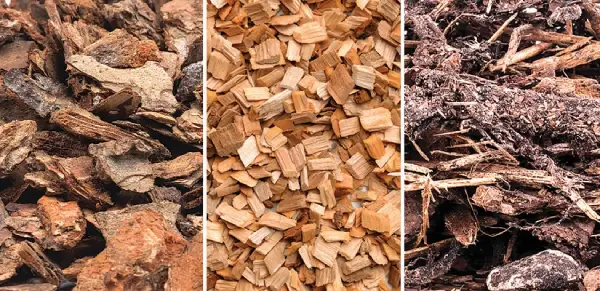
Red mulch is polarizing. It creates immediate visual warmth and can work well with specific home materials, but it's also the easiest to get wrong — matching to the wrong exterior colour, the wrong plant palette, or the wrong neighbourhood context makes it look garish.
Best For
- Homes with warm-toned brick (red, orange-red, terra cotta) where the mulch echoes the material rather than clashing
- Southwest-style or warm-toned stucco or stone homes
- Beds featuring plants with red or orange foliage tones — red Japanese maples, burning bush, red-veined plants
- Specifically for creating warmth and visual depth in beds that face north or are otherwise shadowed — the warm colour counterbalances cool-tone shadow
When to Avoid It
Don't use red mulch with grey, white, or cool-toned exteriors — it will read as a mismatch. Avoid it with purple or burgundy foliage plants (the two warm tones compete). Don't use it if the surrounding neighbourhood is uniformly brown-mulched — the contrast can feel out of place rather than distinctive.
Natural (Undyed) Mulch
Undyed shredded hardwood, wood chips, or straw mulches start as a light blonde or pale brown and weather to a silver-grey over the season. Natural mulch is the best choice for vegetable gardens, edible beds, and any situation where you're uncertain about the safety of dye compounds on food-bearing plants (though iron oxide and carbon dyes are broadly considered safe, natural is an easy way to eliminate the question entirely).
For ornamental beds, natural mulch works best in naturalistic, woodland, or cottage garden styles where the greying and organic weathering integrates with the aesthetic rather than undermining it. It does not create the high-contrast look that modern gardens often seek.
Mulch Colour by Home Exterior: Quick Reference
| Exterior Type | Best Mulch Colour | Why It Works |
|---|---|---|
| White / grey siding or stucco | Black or dark brown | Cool neutrals need contrast; black reads as intentional |
| Red / orange-red brick | Dark brown or red | Brown complements without competing; red echoes the material |
| Beige / cream brick or stone | Dark brown | Warm neutrals; brown unifies without jarring |
| Charcoal / dark grey siding | Black or dark brown | Monochromatic depth; avoids mid-tone muddle |
| Natural wood siding (cedar, pine) | Natural / undyed or dark brown | Organic materials complement each other |
| Warm-toned stone | Dark brown or red | Echoes stone's warm undertones |
Matching Mulch Colour to Your Plants
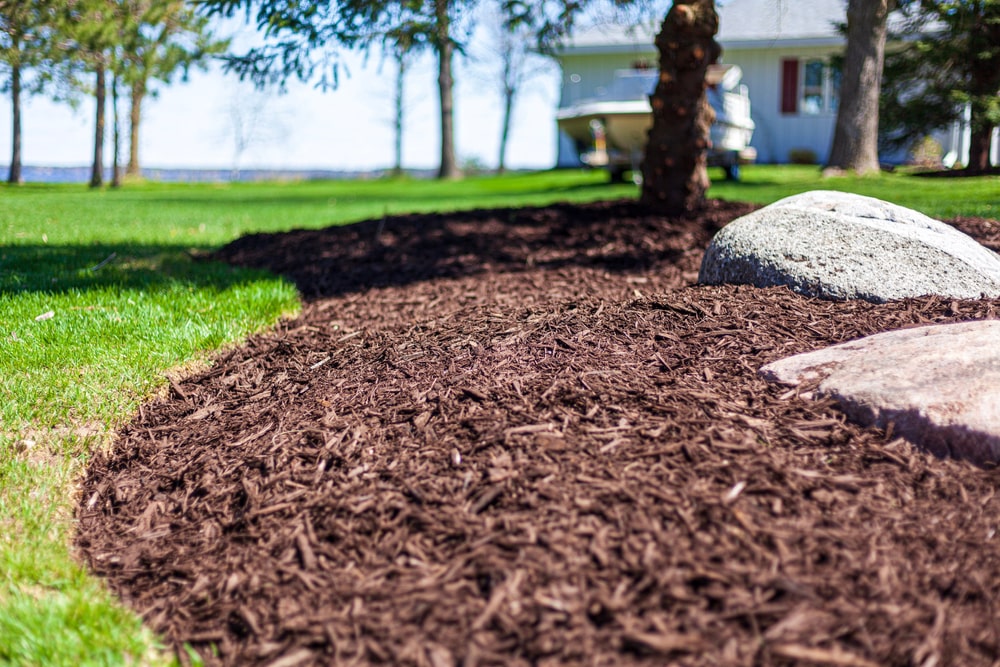
Plants come first, mulch frames them. General principles:
- Green foliage (most plants): all three colours work. Black provides the highest contrast; brown is neutral; red can add warmth in shaded beds.
- Silver or grey foliage (Russian sage, artemisia, dusty miller): black or dark brown mulch makes silver foliage pop dramatically.
- Red or burgundy foliage (Japanese maple, red barberry, weigela): dark brown complements; red mulch competes. Stick with dark brown or black.
- Yellow or gold foliage (gold mop cypress, golden spirea): dark brown or black provides contrast; red mulch looks muddy alongside gold.
- White or pale flower beds: any dark mulch works — the contrast makes light flowers read more brightly.
Frequently Asked Questions
Dyed mulches use iron oxide (for red) and carbon (for black and brown), both of which are considered plant-safe and not harmful to soil biology at the quantities present in mulch. The more relevant question is the wood source — some black-dyed mulches are made from recycled wood including CCA-treated lumber, which contains arsenic. Look for mulch that specifies "clean wood" or "non-recycled" wood source if this concerns you. Most reputable Ontario mulch suppliers sell clean-source product.
Most dyed mulches hold colour for one full season — roughly 6 to 8 months — before fading noticeably. Black tends to fade to grey; red fades to brown; dark brown fades to a lighter tan. Annual refresh (1 to 1.5 inches of new mulch in spring) restores the colour and brings depth back to 2 to 3 inches. Cedar and natural hardwood weather more gracefully because the tone shift is less dramatic than dye fade.
Technically yes, but it usually looks unintentional. A cohesive landscape typically uses one mulch colour throughout. The only exception that reads as deliberate: using one colour in the backyard (which isn't seen from the street) and a more considered colour in the front yard. Mixing black and red in adjacent beds, for instance, creates visual tension without reason.
In theory, black absorbs more solar radiation and can raise surface temperatures higher than lighter mulches. In practice, for established plants in Ontario's temperate summer climate, the soil temperature difference is small enough that it doesn't cause plant stress under normal conditions. If you have particularly heat-sensitive perennials in south-facing beds with full afternoon sun, dark brown is a minor hedge. For most Ontario garden situations, colour choice can be made on aesthetic grounds without concern for heat absorption.
- Penn State Extension — research-based landscaping and mulching guides
- Mulch — Wikipedia — types of mulch, their properties, and applications
Professional Mulch Installation
A&E Lawn Care supplies and installs mulch in the right colour for your property — correct depth, clean edges, proper clearance around plants. Serving Richmond Hill, Vaughan, Markham, and Aurora.