Someone told you rolling your lawn would make it look like a golf course. They were half right — golf courses do use rollers. They also have daily maintenance crews, precision irrigation systems, and sand-based soil profiles that don't compact the way Ontario clay does. On a typical residential lawn, rolling at the wrong time is one of the faster ways to create a compaction problem you'll spend the next two years trying to fix.
That said, lawn rollers do have legitimate uses. Two of them, specifically. This guide covers exactly when a lawn roller helps, when it hurts, how to use one correctly, and what to do if you've already over-rolled a compacted lawn.
- Lawn rollers are useful for two things: levelling frost heaves in spring, and pressing newly laid sod or seed into soil contact.
- Do not roll an established lawn to "flatten" it — this compacts the soil and creates the exact conditions that cause thin, struggling grass.
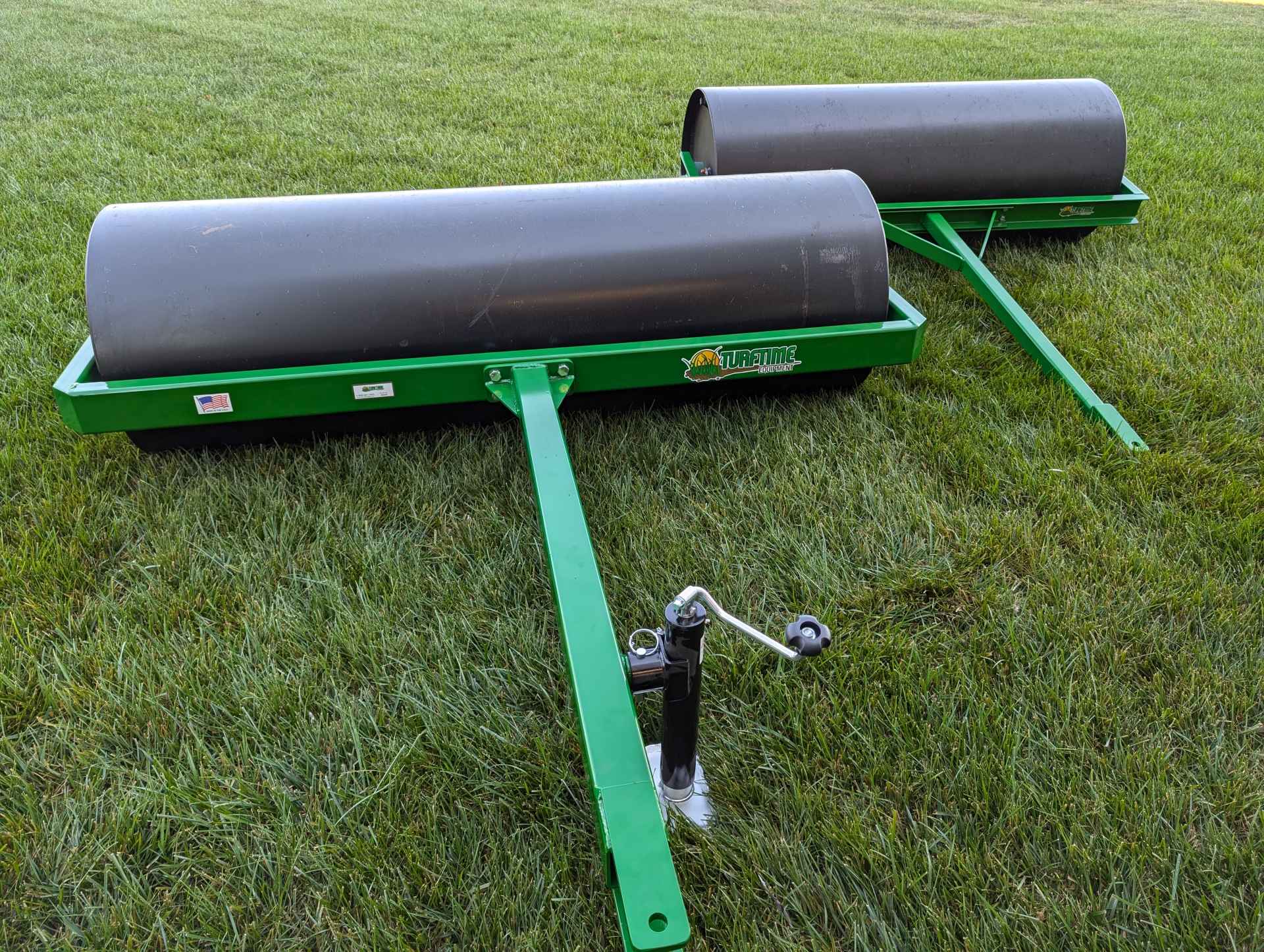
- If you do roll, use a water-filled roller at 1/3 capacity — never a full heavy roller on clay soil.
- Roll on slightly moist (not wet) soil — dry soil won't level, saturated soil compacts permanently.
- If your lawn has an uneven surface from settling, topdressing with compost is a better long-term fix than rolling.
The Two Situations Where a Lawn Roller Actually Helps
1. Spring frost heave levelling
Ontario winters create frost heave — the freeze-thaw cycle pushes sections of soil upward, leaving the lawn surface bumpy and uneven when snow melts. This is common in heavy clay soils across Richmond Hill, Vaughan, and Markham. Light rolling in early spring (once the frost is fully out of the ground) can press these lifted sections back down before you start mowing the season.
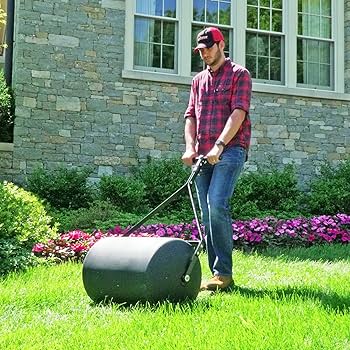
The key word is light. Use a water-filled drum roller at about one-third capacity — heavy enough to make contact, light enough not to compress the soil profile below what you're trying to level. Roll when the soil is just moist — not soft from recent rain or still frozen at depth. One pass is usually enough. Two passes maximum.
2. New sod installation
When laying sod, rolling is a critical step that ensures good root-to-soil contact across the entire surface. Sod that isn't rolled properly has air gaps between the root zone and soil, which dries out the roots and leads to failed patches. Roll immediately after laying each section of sod, using a light to medium water drum roller. This is the one application where rolling produces clear, measurable benefit.
What about after overseeding?
A light pass with a roller or lawn tamper after overseeding can improve seed-to-soil contact, especially in areas that weren't aerated. It's not the same as using a full drum roller — you want gentle pressure to press seeds into the surface, not compress the soil. A 100–150 lb water-filled roller at ¼ capacity works. Alternatively, a seeder with a press wheel is more controlled.
When Not to Use a Lawn Roller
To flatten an established bumpy lawn
This is the most common misuse. A bumpy, uneven lawn surface is typically caused by settling soil, thatch accumulation, animal tunneling, or tree root activity. Rolling compresses the surface but doesn't fix the underlying cause — and on clay-heavy Ontario soils, that compression creates compaction that restricts root growth, water infiltration, and air exchange for years. If your lawn is bumpy from settling, topdressing with compost (¼ inch per application, repeated over multiple seasons) is the correct fix. It fills low spots gradually without compressing the soil profile.
To make grass stand up straighter
Rolling does not improve how grass stands — that's a function of grass health, mowing height, and blade condition. Rolling a lawn in this hope achieves nothing except compaction.
On wet or soft soil
If you can push your finger 2 inches into the soil without effort, it's too wet to roll. Rolling saturated soil creates permanent structural compaction — the soil particles pack together in a way that doesn't reverse without mechanical intervention (like core aeration). Wait until the soil has surface moisture but firm resistance underneath.
Repeatedly, year after year
Annual rolling as standard lawn maintenance practice is not recommended. If you're rolling every spring to deal with frost heave, that's fine — you're addressing a specific, recurring issue. But rolling as a routine without a specific purpose compounds compaction year over year, and Ontario's clay-heavy soils don't need the help.
How to Use a Lawn Roller Correctly
Fill the roller partially
Water-filled drum rollers should be used at about one-third capacity for most residential lawn applications. A full drum roller on clay soil creates compaction depth, not just surface levelling. One-third capacity provides enough weight to press frost heave back down without aggressive soil compression.
Roll when soil is barely moist
The surface should be slightly moist — damp to the touch, not soft. This allows the soil to accept the pressure without cracking (too dry) or compacting permanently (too wet). Early morning after a day of light sun following rain is usually ideal.
Roll in one direction, then cross-direction
For frost heave levelling, roll north-south, then east-west for even coverage. Use slow, steady passes with consistent overlap. Don't rush — overlapping 50% on each pass is better than fast single passes that miss the transitions between heaved sections.
Aerate immediately after rolling
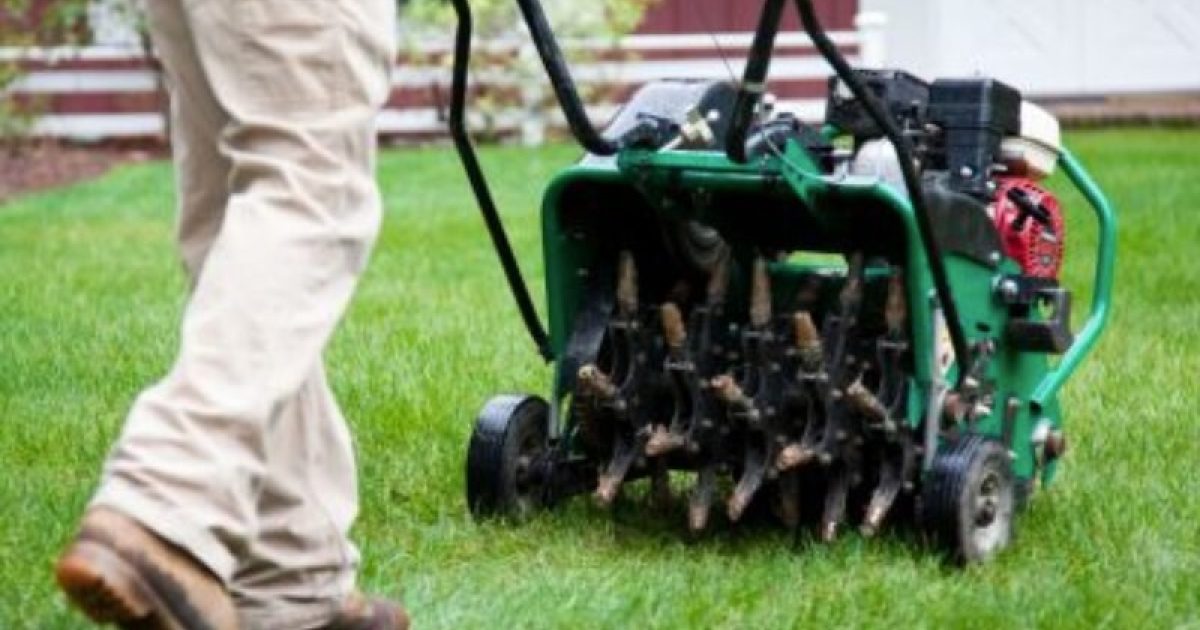
If you've done any rolling on an established lawn — even light rolling — core aerating immediately afterward counteracts the compaction effect. The two actions cancel each other out: rolling compresses, aeration decompresses. For spring frost heave rolling, plan to aerate the same day or within the same week.
Better Alternatives for Common Lawn Levelling Problems
Settled low spots
Topdress with a sand-soil or compost mix. Apply ¼ inch at a time and rake level. Repeat the following season if needed. The grass grows up through the topdressing and integrates it into the soil. Over 2–3 seasons, low spots fill without any compaction. This is slower than rolling but it actually works long-term.
Animal tunneling and mole runs
Press the raised soil back down with your foot and water in. For persistent tunneling, address the pest problem — rolling over it compresses the tunnel but doesn't eliminate it, and the tunnel collapses again.
Rough lawn surface from thatch
Dethatch rather than roll. A thick thatch layer creates a spongy, uneven surface that rolling compresses temporarily. Dethatching removes the source, and the surface levels naturally over the following season. See our dethatching guide for the full process.
Frequently Asked Questions
Need Help With Spring Lawn Prep?
We handle spring cleanup, levelling, aeration, and overseeding. Serving Richmond Hill, Vaughan, and Markham.
- University of Minnesota Extension: Lawns & Landscapes — lawn renovation equipment guides for homeowners and professionals
- Lawn Roller — Wikipedia — how lawn rollers work, when to use them, and the risks of overuse