Your lawn has a bald spot. You've scattered seed over it twice this spring. The bald spot is, somehow, still very much there. Here's what's going wrong: broadcasting seed over an unprepped lawn surface has roughly a 10–20% germination success rate under ideal conditions. Most of that seed never makes soil contact — it sits on thatch, gets eaten by birds, or dries out before a root can form. You're not losing because of bad seed. You're losing because of bad prep.
Reseeding a lawn (also called overseeding) means applying grass seed to existing turf to fill thin spots, recover from damage, or boost density across the whole yard. Done right — timing, prep, technique — it's one of the highest-return lawn projects you can do. Done wrong, you've just bought birds a snack.
- Best time in Ontario: late August to mid-September. Cool-season grasses hit their strongest growth window in fall — not spring.
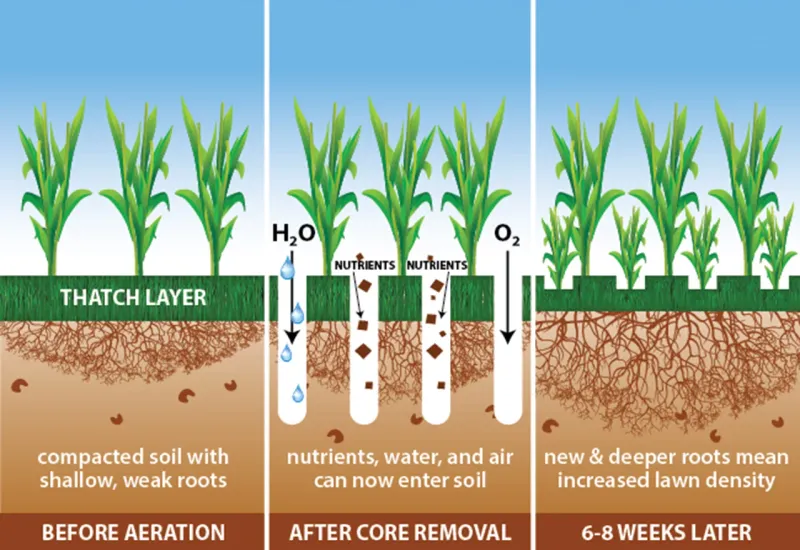
- Aerate before you seed. Germination rates after core aeration run 30–50% higher — seed drops directly into open soil channels.
- Soil contact is everything. Seed that doesn't touch soil simply won't germinate.
- Match the seed to your lawn type. Most Ontario lawns need a Kentucky bluegrass and fescue blend.
- Water twice daily until germination, then back off. Shallow and frequent for the first 2–3 weeks, then shift to deep and infrequent once established.
What Overseeding Actually Is (and Why Broadcast Seeding Fails)
Overseeding is applying new grass seed directly to your existing lawn — no tilling, no full renovation. You're adding density to what's already there. It's used for: filling bare or thin patches, recovering from drought or disease damage, gradually introducing a more drought-tolerant grass variety, or thickening up a lawn that's gone sparse over the years.
The reason spring broadcast seeding typically fails isn't the seed — it's the surface. A thin lawn still has a thatch layer, and seed landing on thatch isn't in the soil. It's sitting on top of dead organic matter with no moisture reservoir and no root pathway. The seed that does germinate faces immediate heat stress in Ontario's June and July. Spring reseeding has a poor track record because the timing and the surface both work against you.
The honest truth: most overseeding failures come down to one thing — the seed never made proper soil contact. This is fixable. It just takes prep.
When to Overseed in Ontario
This is where most homeowners get it backwards. Spring feels like the natural time to start lawn projects. For overseeding, it's the second-best option at best.
The right window for Ontario is late August through mid-September. Here's why:
- Soil temperatures are still warm enough for germination (above 10°C) but air temps are cooling
- Cool-season grasses — Kentucky bluegrass, fescue, ryegrass — hit peak growth in fall
- New seedlings establish roots before winter rather than facing their first summer drought
- Weed pressure drops in fall, so competing plants aren't fighting the seedlings for space
- Cooler temps mean less watering needed during the critical germination window
A client in Markham had been trying to fill a thin, shaded strip every May for three years with zero results. We moved the project to late August, aerated first, and used a shade-tolerant fescue blend. Six weeks later, the area was filled in. Same seed brand they'd been using. Timing and prep were the only variables that changed.
Spring overseeding works — it's just harder. If you miss the fall window, aim for mid-April to early May before soil temperatures climb past 20°C.
Lawn Prep: This Matters More Than the Seed Brand
The biggest predictor of overseeding success is what you do to the lawn surface before the seed goes down. Prep in this order:
Mow short first
Cut your lawn to about 1.5–2 inches before overseeding. This removes canopy competition so sunlight reaches new seedlings, and helps seed reach the soil surface. Bag the clippings this time — you don't want them blanketing the seed.
Dethatch if needed
If your thatch layer is thicker than ½ inch, dethatch before seeding. Thatch is the physical barrier preventing soil contact. Check it by pulling a small plug — if the brown layer between green grass and soil is more than half an inch, it needs to go. See our lawn dethatching guide for the full process.
Aerate — this is non-negotiable for real results
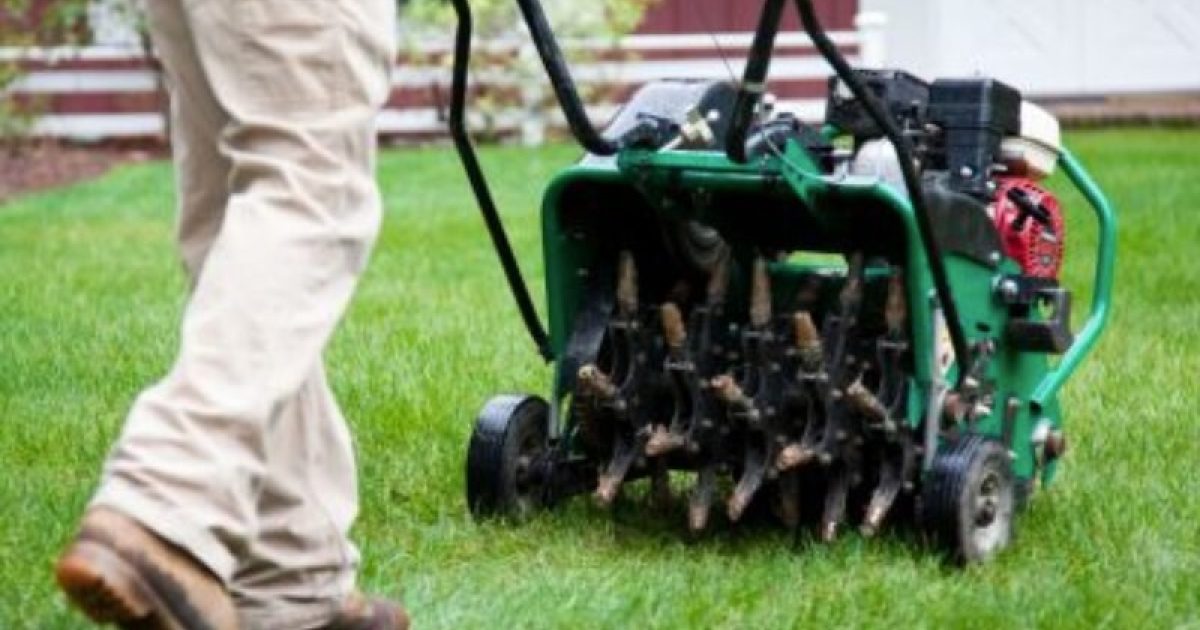
Core aeration punches 2–3 inch channels into the soil across your entire lawn. When you spread seed over an aerated surface, a significant portion falls directly into those channels — direct soil contact, moisture retention, and protection from birds. We don't recommend skipping this step if you want predictable results.
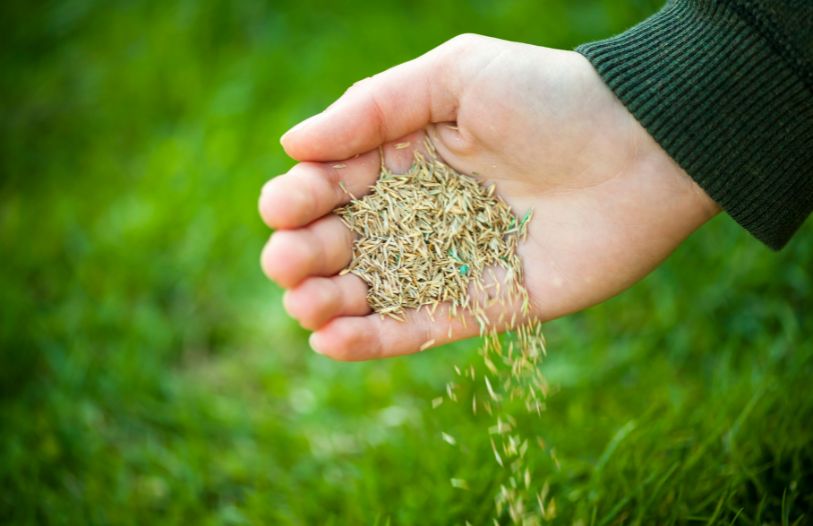
How to Overseed: Step by Step
Step 1 — Mow short and bag clippings
Set the mower to 1.5–2 inches. Bag the clippings instead of leaving them on the lawn. You're creating a clean, open surface for seed to land on.
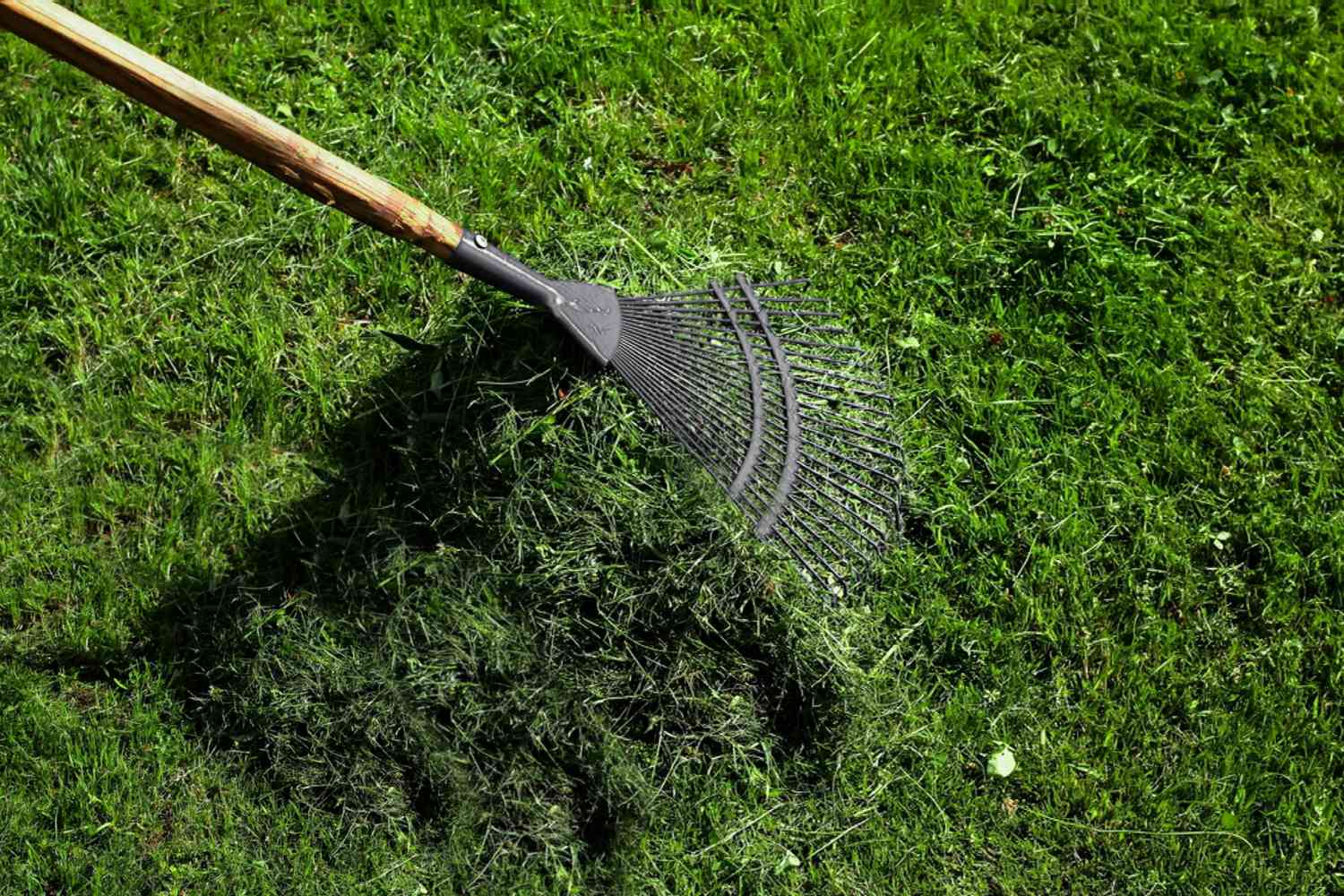
Step 2 — Dethatch (if thatch exceeds ½ inch)
Power rake the lawn to remove excess organic material. Rake up the debris and compost or bag it. You want exposed soil visible between the existing grass plants.
Step 3 — Aerate
Run a core aerator over the entire lawn. Go in two passes — north-south and east-west — for maximum coverage. The plugs left on the surface break down in a few weeks and are actually beneficial: they mix back into the thatch layer and act as a light topdressing.
Step 4 — Apply seed
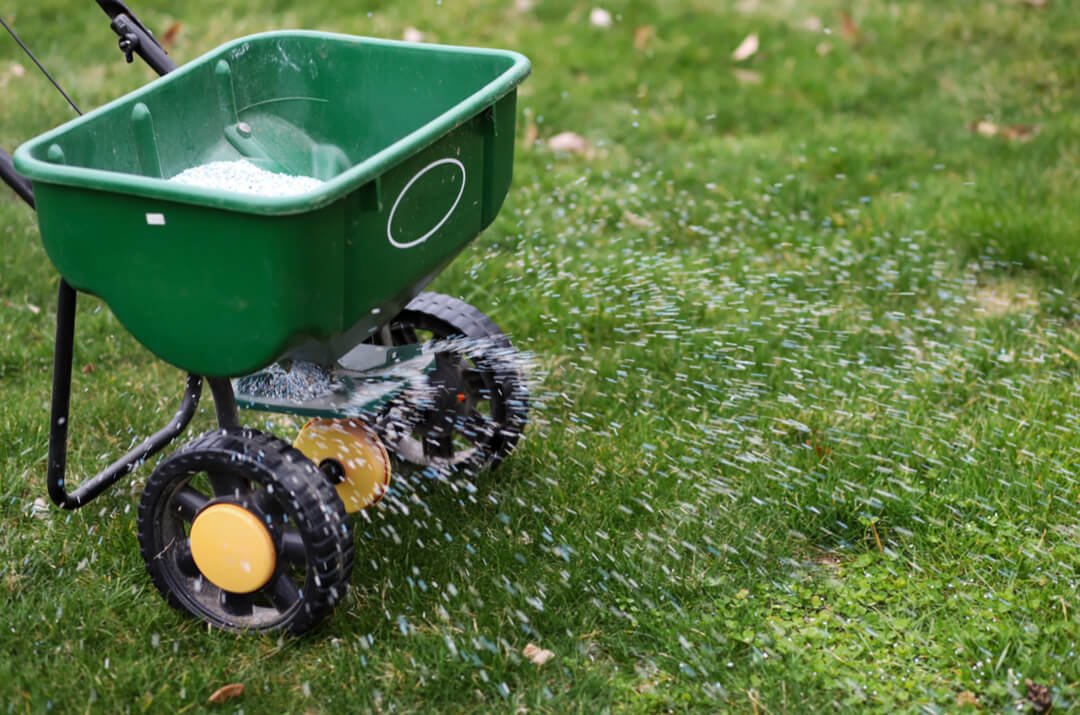
Use a broadcast or drop spreader set to the rate on your seed bag — typically 3–4 lbs per 1,000 sq ft for overseeding, 6–8 lbs per 1,000 sq ft for thin or bare patches. Apply in two passes at 90 degrees to each other for even coverage. Don't eyeball it.
Step 5 — Topdress with compost (optional but effective)
A thin layer of compost (¼ inch) spread over the seeded area significantly improves germination by retaining moisture and adding nutrients. Not mandatory, but worth doing if you're already this far in.
Step 6 — Starter fertilizer
Apply a starter fertilizer high in phosphorus immediately after seeding. This supports root development rather than top growth. A dedicated starter blend works faster than standard lawn fertilizer for this purpose.
Step 7 — Water consistently
Keep the top ½ inch of soil consistently moist — not soaking, just damp — for the first 2–3 weeks. Water lightly twice a day (morning and early afternoon) until you see consistent germination across the surface. Then shift to deeper, less frequent watering. Do not let the seedbed dry out during germination. This is where most DIY overseeding fails — miss two days and the germinating seedlings die.
Best Grass Seed for Ontario Lawns
Ontario is cool-season grass territory. Here's what that means for seed selection:
- Kentucky bluegrass: The standard for Ontario lawns. Excellent density and colour, spreads via rhizomes to fill gaps over time. Slower germination (2–3 weeks). Needs full to partial sun.
- Fine fescue (creeping red, chewings, hard): Excellent for shade, drought-tolerant, lower maintenance. Faster germination. Best for problem spots that stay dry or shaded.
- Perennial ryegrass: Fast germination (5–7 days) — great for quick repair. Doesn't spread, so use it in a blend with bluegrass rather than alone.
- Tall fescue: Deep roots, heat and drought tolerant. Good for full-sun areas prone to summer stress.
For most Richmond Hill, Vaughan, and Markham lawns, a blend of Kentucky bluegrass (60–70%) with perennial ryegrass (20–30%) and some fine fescue for shaded areas is the reliable choice. Buy blends that list the percentages on the label — generic "lawn repair" mixes often include filler varieties that don't perform well in Ontario's climate.
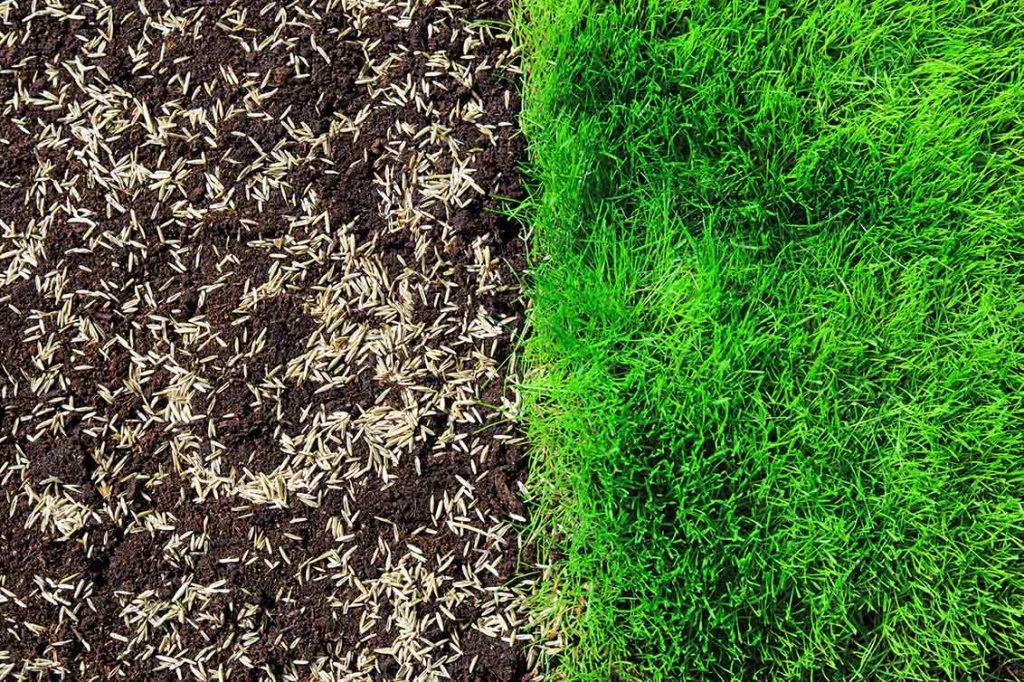
How to Water After Overseeding
Watering is where most DIY overseeding jobs unravel. The schedule:
First 2–3 weeks (germination phase): Water lightly twice a day — morning and early afternoon. The top ½ inch of soil must stay consistently moist. Never let it fully dry out during this phase. The seedling has germinated but has essentially zero root depth; any moisture interruption kills it.
Weeks 3–6 (establishment phase): Once you have consistent germination across the seeded area, back off to once per day for a longer duration. You're shifting from surface moisture to training roots deeper into the soil.
After 6 weeks: Move to a normal schedule — 1 inch of water per week, delivered in 2–3 sessions. Deep and infrequent. Your newly seeded grass should have enough root depth to handle normal moisture cycles.
What to Expect: Timeline
Here's a realistic fall overseeding timeline for Ontario:
- Days 5–10: Perennial ryegrass starts germinating (the fastest variety)
- Days 14–21: Kentucky bluegrass begins germinating
- Week 4–6: Consistent coverage visible across seeded areas
- Week 6–8: First mow of new grass at 3–3.5 inches
- By following spring: New grass fully integrated, lawn density noticeably improved
The results clients see from fall aeration + overseeding + fertilizing aren't magic — they're what happens when all three steps are done in the right sequence at the right time. Each compounds the next.
DIY vs. Professional Overseeding
DIY overseeding is completely achievable. The hard parts are renting and operating the aerator and sticking to the watering schedule — both of which are reasonable asks. If your lawn needs dethatching + aeration + overseeding all at once, rental costs add up quickly and the labour window is tight (ideally one weekend).
Hiring a pro makes most sense when: the lawn needs all three steps at once, the yard is large (aerating 3,000+ sq ft is a workout), or you've tried DIY overseeding twice without results. Usually that comes down to a timing or prep issue we can diagnose on-site.
We do aeration and overseeding as a package in Richmond Hill, Vaughan, and Markham through late August and September. Call (416) 618-5954 or request a free quote online.
Frequently Asked Questions
Ready for a Thicker, Healthier Lawn?
We handle core aeration and overseeding as a package in late August and September. Serving Richmond Hill, Vaughan, and Markham.
- University of Minnesota Extension: Lawns & Landscapes — overseeding technique guides for cool-season turf recovery
- Lawn — Wikipedia — lawn grass biology and renovation practices